
AUDIO VERSION:

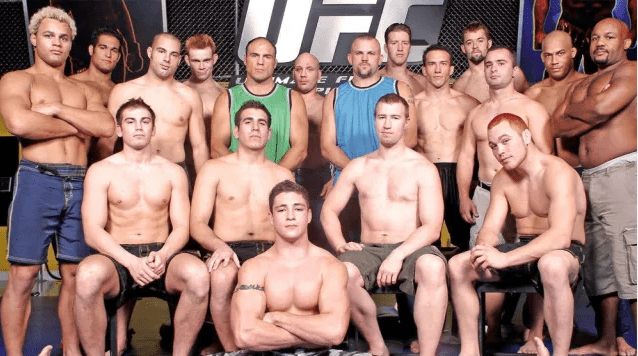
In industries that often proliferate exaggeration and hyperbole, labeling something as ‘transformative’ is rarely accurate, but when The Ultimate Fighter launched, there was no better description.
The launch and legacy of the reality show franchise was the latest topic on Dark Side of the Cage as it delved into the birth of the franchise twenty years ago.
In January 2005, MMA was not a common term to the wider public and the letters ‘UFC’ were likely to elicit images of Keith Hackney striking Joe Son’s groin repeatedly, Kimo Leopoldo wearing a makeshift cross to the Octagon, or Senator John McCain dismissing the sport on CNN.
Despite the marketing, there were fragments of a structure and ruleset beginning with UFC 1 in November 1993. Rules were few and far between; biting, eye gouging and groin strikes were illegal at the first event (although strikes to the groin would be dropped from the restrictions). While rounds would be eliminated at the sophomore event, the first card did feature an unlimited number of five-minute rounds – they just weren’t necessary because no fight lasted five minutes.
Over time, it became dubbed the ‘Zuffa myth’ that the Fertitta ownership ‘ran’ toward regulation while the SEC era ‘ran away’ from it. History doesn’t comport that to be accurate because SEG was fully aware that the initial shock value of stunt programming had its run on pay-per-view, but it could not continue without amending its image.
Judges were added in 1996, weight classes and mandatory gloves in 1997, and yes, they were regulated in certain states beginning with Mississippi and Louisiana. In 1999, an attempt for sanctioning in Nevada was pulled at the last minute with the fear that the votes were not there. SEG could only get the UFC so far, and with mounting debts, famously sold the fledgling enterprise to Lorenzo and Frank Fertitta for $2 million in January 2001.
The sale occurred shortly after New Jersey regulated the sport and opened the state for UFC and just before the establishment of the Unified Rules of Mixed Martial Arts. Nevada’s approval followed New Jersey as Zuffa tried to re-image its brand and expand its pay-per-view exposure, which had dwindled with many carriers dropping the shows in recent years.
While the September 2001 debut in Las Vegas was poised to be a ‘coming out party’ for Zuffa, it was marred by factors including staging a live event weeks after 9/11, the loss of its main event between Tito Ortiz and Vitor Belfort with the latter injured, and a card that exceeded the allotment of time, forcing myriad refunds.
The company continued losing money with the lone glimmer of hope occurring in November 2002 with Tito Ortiz fighting Ken Shamrock and leading to 150,000 homes purchasing the event – a record for the new ownership group – but one unsustainable and returning to normal levels after.
Awareness of the UFC was limited to pockets of the internet, the occasional segments on Fox Sports Net, and word of mouth. Without television distribution, it was a hope and a prayer that the company rested on for new fans to plop down money to see what it was all about.
By 2004, it was believed Zuffa had lost $44 million in its venture and time was ticking for the Fertittas on whether to cut bait and its losses.
“One morning in 2004 I called Dana and said we wanted out,” says Lorenzo Fertitta. “We were spending our family fortune. Dana called back and said he had found a buyer offering $4 million.” (Ultimate Cash Machine, Forbes)
The ‘Hail Mary’ came with the notion of a reality television vehicle when the genre was flooding cable and network schedules.
Dana White hated the idea as he came from a boxing pedigree and envisioned a program akin to USA Network’s ‘Tuesday Night Fights’ where the fights were the product and less so, personalities couped up inside of a house and recreating ‘Animal House’.
He (Dana White) wasn’t thrilled about it; he dreamed that, like boxing, the UFC would get its own weekly fight night show. White told me Fertitta was the one who wanted to do the reality show because he’d allowed a producer to shoot a series called ‘American Casino’ at one of his Las Vegas properties and had seen firsthand what the exposure could do for business. (Let’s Get It On by John McCarthy)
No broadcasters were willing to take a chance on the tainted image that the UFC had acquired. When interviewed for the VICE series, Kevin Kay shared that Spike TV wasn’t even sold after its initial meeting. Kay, who worked under Doug Herzog at the network in 2004, said the difference maker was UFC returning to the table with the offer of paying to produce the series – all Spike TV had to do was give them an hour in the schedule. The deal was completed.
The $10 million price tag was every bit the analogy of a gambler heavy in debt and putting all his chips onto the table.
The flagship programming on Spike TV in this era was World Wrestling Entertainment, occupying its Monday slot from 9 – 11 p.m. ET but also coming up on the end of its five-year agreement. It has often been stated that Vince McMahon’s blessing was required for The Ultimate Fighter to not only join Spike TV but to air directly after WWE Raw. Later, Paul Heyman would take credit as the only voice in McMahon’s inner sanctum to convey the danger this product presented as a competitor. The UFC received the coveted slot immediately after WWE Raw.
In the Dark Side of the Cage series, Kay cited a lead-in of “eight million viewers” for Raw, which was an exaggerated figure but Raw was consistently doing above four million viewers and more than five million for some of its overrun segments in this era.
While you can speak about Dana White’s famous speech, the antics of Chris Leben and Josh Koscheck, and the finale between Forrest Griffin and Stephan Bonnar, you cannot understate the importance of TUF’s placement after WWE programming for its initial success.
Out of the gate, the show was holding on to approximately 1.7 million viewers and was a smashing success for a network the size of Spike. Within a month, the show was hitting the two million viewership mark and set another record on February 28 for a major fight between Chris Leben and Josh Koscheck with over 2.2 million viewers. More importantly, that episode held onto 67 percent of the 18-34 audience watching Raw that same evening.
Ultimate Fighter remained strongest among Male 18-34 wrestling fans, retaining a whopping 67% of the inflated Raw audience. They retained 48% of the Women 18-34 viewers, which is way down from the prior week. They retained 44% of the Male 35-49 viewers, well up from 30% the prior week. They also retained 49% of the Women 35-49, up from 25% the prior week. (Wrestling Observer Newsletter, March 7, 2005)
On television, it was a hit, but the goal was to cultivate these new fans into paying consumers. The first sign of that transfer was demonstrated on February 5, 2005, just two weeks after the launch of the series. At UFC 51, Tito Ortiz finally fought Vitor Belfort after years of waiting. The show drew a reported figure of 105,000 buys, albeit small potatoes compared with future pay-per-view performances, it was a big success given UFC’s mid to low five-figure levels.
All roads led to April, with back-to-back weekends that would definitively stamp the series’ success. On April 9, fans piled into the intimate Cox Pavilion in Las Vegas for the live finale, which featured the awarding of the light heavyweight and middleweight contracts and a main event between Ken Shamrock and Rich Franklin.
The finale averaged 2.6 million viewers and was highlighted by the fight that is credited as the ‘most important’ in UFC history between Forrest Griffin and Stephan Bonnar. While it was an incredible fight and mythologized as the years went on, there was no way this series was being dropped after the tremendous success. Not to mention, WWE was leaving Spike to return to the USA Network and Spike was putting all its resources behind this new franchise with the news of a second season coming later that year.
The following weekend was even bigger as the coaches from the season – Light Heavyweight Champion Randy Couture and Chuck Liddell – would fight at UFC 52 in a rematch. Their first fight in June 2003 did a reported figure of 49,000 buys and a gate of $645,000. With thirteen weeks of Spike TV exposure, those numbers skyrocketed to 280,000 buys and $2,575,450, a new pay-per-view record in the Zuffa era. One year later, a third fight swelled to 400,000 buys and $3.4 million at the gate.
The dam had burst, and Spike TV was the Trojan horse that placed UFC on cable television. After dipping its toe with a reality series, it dove headfirst with live Fight Night specials beginning that summer, a follow-up season in the fall, and essentially becoming the ‘UFC Network’ for the next six years before the franchise left for Fox.
While TUF has become a blip on the radar of even the diehard UFC fan, it continues more than twenty years later. It has produced champions, Hall of Fame-level fighters, big fights pitting coaches together, and an easy entry point for hesitant onlookers to see the sport on their terms.
It has been debated whether WrestleMania 1’s failure would have been the WWF’s death knell, but there is nearly no debate that if The Ultimate Fighter floundered, it would at least have ended the Zuffa ownership and, quite possibly, the fate of the UFC.
