
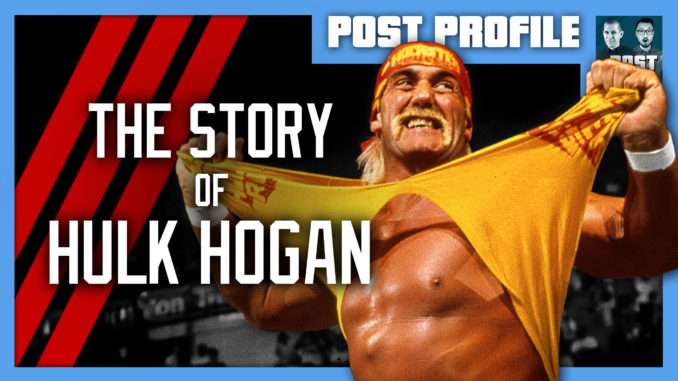
“What is the legacy of Hulk Hogan?”
It’s the question so many have attempted to answer this week, and there is no succinct way to answer.
The life of a 71-year-old, who spent most of it as a public figure and speaking to a mass audience, becomes impossible to untangle when so much fiction is baked into the facts.
Somewhere along the way, Terry Bollea morphed into Hulk Hogan, and few were able to decipher, including Bollea.
For some, he was their gateway into professional wrestling, a real-life comic book hero, a literal cartoon on CBS television, wrapped in the American flag. He epitomized the overused “larger than life” label. An individual who took the WWF to immense heights and became one of the greatest draws in the industry’s history, leading both the WWF and WCW to boom periods.
For others, a political shark in an industry built on paranoia and distrust, using his sizable leverage at every turn.
Outside of professional wrestling, he was marred by controversies for over a decade, from the leaking of conversations with his son in prison that were disturbing, a sex tape, and the subsequent racist audio it contained, a Peter Thiel-funded lawsuit that brought down Gawker, and wrapping himself around the Republican party and Donald Trump.
It’s all part of the story of Hulk Hogan.
That story begins on August 11, 1953, when the second of two boys to Peter and Ruth Bollea, arrives in Augusta, Georgia. The family had arrived in Aiken County one year before when Peter accepted a construction job in the area.
It was less than two years after Bollea’s birth that they uprooted and migrated to Tampa, the city where Bollea was most affiliated. It’s a thought exercise if Bollea doesn’t learn about his local wrestling outfit, Championship Wrestling from Florida, becoming influenced by Superstar Billy Graham and Dusty Rhodes, instead staying in Georgia and discovering Mr. Wrestling II and Thunderbolt Patterson.
Bollea was a Little League pitcher, generally considered big for his age, and was mentioned multiple times for being chastised for having a large head during his adolescence. After an elbow injury, he switched passions and fell in love with music, playing bass guitar, and from all accounts, leading to a chance meeting.
While playing a gig at The OP (The Other Place), it’s believed that Bollea met Jack Brisco, and the former NWA Worlds Heavyweight Champion shared with The Wrestling Perspective in 1996, he saw the potential right away:
It was about midnight. I walked into this place and standing there was Hogan playing guitar in a band. God damn, if I had that boy, I could become rich (laughs). So they went on break. During the break, I came over to him at the table for a beer. He was just so impressive. He was only like 21 years old at the time. I couldn’t believe my eyes. I asked him, “Did you ever think about being a wrestler?” “It’s what I’ve always wanted to do. I’m a big fan of yours and I’ve been watching you for years. It’s what I’ve always wanted to do.” “Well, be at the Sportatorium at nine o’clock in the morning and we’ll get you going.
Championship Wrestling from Florida was under the control of Eddie Graham. It was no surprise that Brisco’s eyes widened when he saw the raw material of the future Hulk Hogan and was indoctrinated into the fraternity.
The popular tale Hogan would espouse was being trained by Hiro Matsuda, who took advantage of the trainee but snapping his leg in half, but showing the fortitude to come back once healed and pursue this career. The notion of a trainee being abused in the Florida system is hardly a tough one to believe, given the reputation of that geographic location and Graham housing the territorial “policeman” Bob Roop to weed out pretenders with explicit force.
However, there is no verification that Hogan’s leg was broken or suffering anything worse than a sprain, and never a story Matsuda was known to share, and one that Jerry Brisco outright denied. But a great origin story doesn’t begin with a sprain and end with a Tylenol, and Hogan became the greatest author of his own mythology, where the blurred lines became either an eye roll or a distinct charm of Hogan’s retelling.
His career kicked off in 1977, wrestling as the forgotten Super Destroyer for a cup of coffee in Florida, and he was quickly sent off to Tennessee as Terry Boulder.
Joining him would be career-long sidekick Ed Leslie, a friend from Florida, whose sister attended Robinson High School with Bollea. Together as The Boulder Brothers, they performed as babyfaces in Memphis. Jerry Jarrett and Jerry Lawler essentially had the opportunity to take the first stab at moulding this piece of clay, utilizing music videos and other ways to market the super green Bollea.
He would team with Leslie, as well as Tommy Gilbert (the father of Doug & Eddie Gilbert), and work main events with Southern Heavyweight Champion Don Bass at the Mid-South Coliseum in the infancy stages of his career.
Boulder would have stops in Southeast Championship Wrestling and made his way to Georgia Championship Wrestling, where he was rechristened as “Sterling Golden”.
The Georgia stint is a brief one, but it opened the door for Bollea to work with Stan Hansen, Austin Idol, Andre the Giant, and a 22-year-old Canadian export named Bret Hart.
Between the strength of Memphis’ local television on WMC and Georgia Championship Wrestling’s penetration, Bollea was earning more of a spotlight. But in 1979, he also got his first break in the massive media market of New York and was booked by Vince McMahon Sr.
After a few squash matches on television at Ag Hall in Allentown, and his latest rebranding to “Hulk Hogan”, he wrestles Ted DiBiase at Madison Square Garden, entering the company as the latest heel protégé of Classy Freddie Blassie.
The arena that Hogan would become forever linked with, making over fifty appearances in, began on December 17, 1979. Top billing that evening was reserved for a Texas Deathmatch involving Bob Backlund and Bobby Duncum, with support from a rare NWA Worlds Heavyweight Championship match between Harley Race and Dusty Rhodes, and Antonio Inoki wrestling The Great Hossein (The Iron Sheik).
Hogan defeated DiBiase by stoppage in front of the sold-out crowd, opening the door for eight additional appearances at The Garden in 1980 against Dominic DeNucci, Tito Santana, Rene Goulet, Gorilla Monsoon, and Andre the Giant.
Despite McMahon’s best promotional efforts in 1987 to market Hogan and Andre’s WrestleMania 3 contest as a “first-time” ever meeting, it was not only false, but the two wrestled in stadiums ranging from Shea Stadium to the Louisiana Superdome, and Andre was one of Hogan’s most consistent foes during his first run in New York.
A major door opened in May 1980 as Hogan went to New Japan Pro Wrestling for the time, where he would become one of the top foreigners the promotion ever had. For Hogan’s purposes, it was a great-paying gig and furthered his understanding of working by seeing the adulation exhibited by the fanbase toward Antonio Inoki. In Japan, Inoki was not the top babyface; he was an idol and a God among his supporters, and a level of popularity that is hard to convey for those outside of Japan during this era.
Hogan teamed with Stan Hansen in that year’s MSG Tag League tournament, going to the final and losing to Inoki & Bob Backlund. Two years later, it was Hogan teaming with Inoki as the pair won the same tournament, and Hogan had risen to grand heights in Japan.
Hogan’s biggest match to this point in his career occurred on August 9, 1980, when he worked with Andre in the mid-card at Shea Stadium in front of 36,295, headlined by Bruno Sammartino and Larry Zbyszko in a steel cage match. In the summer of 1980, it was Andre with his arm raised, but few understood how important this program would be over the next decade as the WWF expanded on network television and pay-per-view.
The aura of Hogan was growing exponentially, and after a recommendation by Terry Funk, he was cast in the pivotal role of “Thunderlips” in the 1982 release, Rocky 3. The big screen exposure and ties to the Rocky Balboa franchise helped usher in the industry’s next crossover star as Bollea would adopt “Eye of the Tiger” and later work with Mr. T for one of the biggest events in the WWF’s history.
But before the riches of New York came Hogan’s move from the WWWF to Verne Gagne’s AWA, beginning in August 1981.
Minnesota was a thriving territory built on a combination of excellent technical wrestling, brooding brawlers, and some of the best talkers in the industry. The travel was heavy, the weather was rough, but it was an education for Bollea as well as the blossoming of what would become “Hulkamania”.
Like New York, Gagne saw Hogan as a heel given the size and demeanor, but the audience saw it differently, and quickly, Hogan ascended as a babyface in Minnesota chasing after AWA Heavyweight Champion Nick Bockwinkel.
He rose the ranks working opposite Jerry Blackwell in multiple “Bodyslam Challenges” to promote the size and strength of Hogan, who was netting fictitious prizes of $5,000 for each slam of the big man. After Blackwell, he engaged in a feud with Jesse Ventura, a man who would forever be disenchanted by Hogan when the latter squashed Ventura’s unionization efforts in the WWF.
Hogan first challenged Bockwinkel for the AWA championship in February 1982 in Chicago, and the two routinely ran their matches through the St. Paul Civic Center and constantly coming up with ways for Bockwinkel to narrowly escape with his title, often losing by disqualification.
Many have looked back at Hogan’s handling in the AWA as evidence that Gagne had no clue what he had on his hands by not placing the belt on the force of nature, and allowing McMahon to harvest the fruits that Gagne had planted. It’s missing a major point that, as sizable a territory as AWA claimed, Hogan’s primary obligation was to New Japan Pro Wrestling during this early ‘80s period.
After 1981, the notion of Hogan losing matches was just about nil. He was protected to such a degree that if it wasn’t Inoki or Hansen, there was no way of getting any championship off Hogan had Gagne pulled the trigger. The AWA was quick to merchandise Hogan, which would breed contempt between the two as Hogan astutely understood his leverage and drawing power, and knew the differences Hogan made on their live event business.
The rubber hit the road on April 24, 1983, when AWA staged “Super Sunday” and built around the latest presentation of Bockwinkel vs. Hogan, and thought to be the long-awaited coronation.
With a sold-out Civic Center and adjacent St. Paul Auditorium producing a $300,000 gate, the audience experienced the 1-2-3 as Hogan pinned Bockwinkel and a new champion was crowned…or was he? Authority Stanley Blackburn invoked the instant replay to reveal that Hogan had thrown the champion over the top rope and thus causing a disqualification and yanking the rug out and eliminating the elation of the crowd. It was the closest Hogan would come to holding the championship, and it began the countdown to Hogan’s eventual exit from the promotion.
Meanwhile, in Japan, Hogan’s star continued to reach new heights after engaging in one of the biggest matches of his career on June 2, defeating Antonio Inoki by knockout. It was a legendary ending where Hogan struck the icon with the Ax Bomber and sent Inoki flying off the apron, and the match was stopped with the idea of Inoki legitimately being hurt and keeping the work under wraps. Hogan became the first to hold the IWGP Heavyweight Championship, which was not like the modern version, but a championship defended annually.
Hogan was splitting time between the AWA and New Japan Pro Wrestling when a career-altering event occurred. On November 4 in Chicago, Hogan was teaming with The High Flyers when he had a chance meeting with WWF photographer Steve Taylor. He was there to take photos for the upstart Victory Magazine that the WWF was producing and would feature stars from outside of its territory. Taylor conveyed to Hogan that Vince McMahon Jr., who had recently completed a purchase of the promotion from his father, wanted to meet.
Hogan was off for the year-end tour with New Japan and would give his notice to Gagne before the big Christmas Night show, which he was booked for in an eight-man tag. Gagne either didn’t take it seriously or didn’t care because he continued to promote Hogan up until show time, but there was no Hogan, and something was up, as “Dr. D” David Shults also skipped the show.
The pieces fell into place days later as Vince McMahon put his vision into “execution mode” with several key maneuvers. On December 26, The Iron Sheik ended the nearly six-year title reign of Bob Backlund (save for a brief transitional switch with Inoki) and followed with a historically significant show on December 27 at The Chase Plaza in St. Louis featuring the arrivals of Hogan, Shults, and AWA announcer Gene Okerlund.
McMahon had his soldier to stand at the frontline of his plan for national domination, and as the calendar turned to 1984, it was going to be an all-out assault by the younger McMahon to disrupt the industry with Hogan leading the way. The year kicked off on January 23 as Hogan ended The Iron Sheik’s quick reign and a new face of the company was crowned, doing what Gagne was hesitant about. The difference was that McMahon had no plans of taking the belt off Hogan and would ride this championship wave for the next four years.
While many promotions were caught with their pants down as McMahon broke down barriers, raided talent, and outspent for television clearances, there was no one targeted more than the AWA. It became McMahon’s mission to strip the Minneapolis-based group to its core, going after its top attraction, its lead salesman in Okerlund, down to production and broadcasters, and attempting to strip the AWA of its home broadcaster, KMSP, by offering the outlet six figures, and being turned down. Instead, McMahon settled for the AWA’s previous home at WTCN to launch Superstars of Wrestling and staged shows to directly compete with the AWA. WWF also went after their TV broadcaster in San Francisco, who were paying nothing for the product and rubberstamped McMahon’s offer of $2,000 per week to air his promotion instead and hurting AWA’s ability to run at the Cow Palace with weaker television.
Also jumping to the WWF were AWA stalwarts Jesse Ventura, Adrian Adonis, Bobby Heenan, and Mad Dog Vachon. WWF would run counter to the AWA throughout 1984, but the incumbent held firm in its market despite the growing success of the national expanding entity. McMahon pulled out all the stops, going so far as putting Okerlund in the ring to team with Hogan, later promoting a team of Hogan & Mad Dog Vachon, and Hogan squaring off with Ventura to appeal to the AWA loyalists.
Gagne didn’t surrender without a fight, allegedly offering up $100,000 for his trainee, The Iron Sheik, to break Hogan’s leg during their Madison Square Garden match. Instead, Sheik sounded the alarm and alerted his promoter and Hogan, rather than perform the “hit”.
It was a war of attrition, and the WWF could absorb the counterstrikes while the AWA would weaken over time and would limp into the ‘90s, where it met its demise.
The world was changing by 1984, and Vince McMahon and Hulk Hogan were the catalysts in growing beyond the industry and into the mainstream through gambles, trials, tribulations, and eventual domination.
**
They say that the winners get to write history, and for many viewing the industry through a WWF lens, it begins in 1984 and the national expansion.
The detailed contrast of “smoke-filled arenas” and VFW Halls housing this fringe form of entertainment, with Vince McMahon’s presentation of big sporting arenas, network television, and appealing to Madison Avenue, sounds great at a NATPE convention or to someone without any historical understanding of the business.
Whether it was Gorgeous George on the Dumont Network, weekly network broadcasts on Friday night in Japan, Lou Thesz and Baron Michel Leone, Jarry Park in Montreal, or tens of thousands piling into the Louisiana Superdome multiple times per year, that was never part of the WWF narrative.
Professional wrestling went from an industry of multiple territories that thrived with more full-time opportunities for U.S.-based talent into one dominant promotion reaching new heights. There was a strong oppositional force in Jim Crockett Promotions, the backend of World Class’ peak, and others trying to make ends meet in the AWA, Memphis, and Portland, among them. The WWF became the name brand in professional wrestling, but there were also fewer options than ever by the ensuing decade.
McMahon is often positioned as both a promotional genius and someone who did great harm to the territorial system, and both have merit, to a degree. McMahon saw opportunities by getting onto the USA Network and launching All-American Wrestling in August 1983, offering competitors a chance to send tapes of their stars for a national audience, and being featured in their Victory Magazine. A nice gesture in the short term, but the long game was introducing these talents to the WWF audience and eventually signing them away.
The WWF stockpiled by stripping the AWA of its key talents, bringing in Roddy Piper and Greg Valentine from Mid-Atlantic, Paul Orndorff from Georgia Championship Wrestling, Randy Savage & Jimmy Hart from Memphis, Junkyard Dog from Mid-South, and the formula was transparent.
George Scott was the booker in the WWF and McMahon’s chief lieutenant, and helped put the pieces in place for a pivotal year in the company’s history.
Brad Balukjian’s book The Six Pack gives clarity on the roles of Jim Barnett, Joe Perkins, and Jim Troy, who were tasked with getting the WWF into as many markets as possible, a big gamble where plenty of money was going out with the hope of it paying dividends down the road. It was effective with the WWF expanding from twenty-four markets in 1982 to forty-four in 1983 and expanding to 201 by the summer of 1986.
Troy served as a conduit to get McMahon in front of USA Network executive Kay Koplovitz and begin a relationship with the network that continues today as the home of Friday Night SmackDown and, by extension, Peacock.
It was a constant “go, go, go” mentality from new markets to break into, added television in Tuesday Night Titans in May 1984, taking over Maple Leaf Wrestling in Toronto, taking on territories on their home turf to mixed success, agreeing to purchase Stampede Wrestling, and ending the year with access to nearly one hundred markets nationally.
The summer of 1984 was pivotal, with a purchase of Georgia Championship Wrestling finalized and the WWF assuming the WTBS time slots on the Turner networks and expanding their reach with another national window for $750,000.
The upstart MTV saw the WWF as a great complement to its programming and partnered for “The Brawl to End It All”. The crossover was Cyndi Lauper, who had reached incredible fame and was linked to pro wrestling through the casting of Captain Lou Albano in the “Girls Just Wanna Have Fun” music video.
With Madison Square Garden booked on July 23, the WWF and MTV crossover saw Wendi Richter unseat Fabulous Moolah as the Women’s Champion and Hulk Hogan make a title defense against Greg Valentine, generating a 9.0 rating on MTV (its second largest in its short history) but failed to sell out the venue, something Hogan achieved in five of his eight MSG main events that year.
Despite not reaching capacity, the greater focus was on the television reach and was viewed as a home run, enough to revisit the same experiment in February 1985 with greater stakes attached, using The War to Settle the Score as a precursor for the WWF’s return to MSG six weeks later for the inaugural WrestleMania.
The February special did sell out The Garden along with the adjacent Felt Forum for Hogan vs. Roddy Piper and a major angle being shot, leading to Hogan & Mr. T facing Piper & Paul Orndorff on March 31 and the involvement of Cyndi Lauper. The 9.1 rating proved the success of the marriage and was as strong a promotional tool for the biggest gamble the WWF was undertaking.
While pay-per-view was in its infancy, the concept of WrestleMania was to present its own super card with approximately 200 closed-circuit locations booked around the country. They had built a syndication model, giving away their show (or in many cases, paying the broadcasters to air it) and now hoping to recoup some of that revenue by fans paying to see the “big event”.
McMahon has attested to everything being on the line with this show, and there was an incredible risk if WrestleMania had bombed. He was paying out a lot of money on the idea that his product could export across the country beyond the Northeast borders. There were several aces up their sleeve from reworking their arrangement with New Japan Pro Wrestling, so that Inoki’s group would have to compensate WWF for talent being sent over, and an eventual sale of the WTBS time slots to Jim Crockett Jr. for $1 million and taking in a profit by the middle of 1985 for some financial relief. Another area of interest between 1983-85 saw the WWF stage tours of Kuwait, Egypt, Bahrain, Qatar, Jordan, Oman, and the UAE, and it remains a mystery if there was significant revenue attached to these tours for the WWF.
One week prior, roughly seventy of the closed-circuit locations pulled out and gave a signal that this may not work. But through several unique circumstances, the show caught on in the final week largely through the promotional efforts of the top celebrity, Mr. T., and his tag partner, Hogan.
The hosting role for Saturday Night Live on March 30 was scheduled for actor and comedian Steve Landesberg, but he had to pull out during the week (he would make an appearance on the show but could not host) and opened the door for Hogan & Mr. T to get some last-minute PR for WrestleMania the next afternoon. It was a big success as the show was averaging a 7.5 rating on NBC that season and featured multiple plugs for ‘Mania.
Not as advantageous was an appearance on The Richard Belzer Show that week, where Hogan was coaxed into applying a hold on the host, and ended up choking Belzer, whose head bounced off the floor and was bleeding as he threw to break in a stupor. It led to a lawsuit, but also added attention when the WWF was hungry for it.
In The Six Pack, former WWF VP of Finance Bob McMullan categorized WrestleMania as a big success by grossing $9 million and $300,000 going toward Hogan.
It was a formula that was repeated in 1998 with Steve Austin and Mike Tyson, where the celebrity brought eyes to the company’s chosen star and was able to take that casual observer and keep them engaged with the core product.
The next step was network television, with the cultivation of a relationship with Dick Ebersol and NBC to launch the popular Saturday Night’s Main Event franchise on May 11 in the slot occupied by SNL during one of its off weeks. With Hulk Hogan and Cowboy Bob Orton paired on the special, it generated an 11.6 rating, and Ebersol looked like a genius while McMahon was now commanding audiences in syndication, closed-circuit, NBC, USA Network, WTBS, MTV, and soon to add Hogan’s own CBS cartoon.
As noted in Abe Josephine Reisman’s Ringmaster book, WWF’s revenues escalated from $29.5 million in 1984 to $63.1 million in 1985 and $77.4 million in 1986, with the figures being reported in a future lawsuit.
The NBC and CBS platforms were huge for the WWF and contributed to many young kids discovering these real-life superheroes, who, unlike Superman or Batman, appear at your local arena several times per year.
The formula was fairly straightforward, as WWF was mass-producing its style as the McDonald’s of professional wrestling. Competitors failed to understand the value of star power over in-ring technicians, with the idea that if they had the “better” wrestlers, the fans would realize and reject the WWF style of prototype “big man” matches with little fanfare, but were marketed to such a degree that the audience saw stars.
One of the key philosophies that differentiated the WWF from Jim Crockett Promotions was building around a babyface, as opposed to a heel. Hogan was the All-American good guy who triumphed over the villains and sent crowds home happy with a posing routine to the sounds of Rick Derringer. In JCP, it was the idea of the babyfaces being built up and constantly chasing Ric Flair throughout the ‘80s, and whether tonight would be the one where Flair can’t escape with the belt. While JCP (later WCW) would soften as the decade ended, in 1985, it was drawing tremendously well with this presentation and using Dusty Rhodes as the lead babyface.
In WWF, the schedule was historically one of the hardest ever conceived, with the WWF criss-crossing the country before strategic routing was incorporated, so you had talents crossing time zones, needing to look the part, bumping every night, and on a never-ending hamster wheel that had dire consequences for the lifestyle it developed, and problems created.
While the tales of wrestling 300 nights per year are often thrown out, and Hogan famously defying time by stating he worked 400 nights per year because of Japan, his peak number of matches was 162 in 1987, and he never wrestled more than 150 per year in the WWF, according to Cagematch.
Beyond the first WrestleMania, George Scott found himself on the wrong end of a political fallout and was bounced by the company, with booking duties led by Pat Patterson and signed off by McMahon.
By 1985, JCP and AWA were still going strong, and World Class had yet to hit its decline, while WWF was gaining market share. But it was a series of hits and misses. Often, when WWF went into an established market, it was not an instant success because it was different from what that audience had been raised on.
In August 1985, a remarkable attendance of 50,000 attended the Ohio State Fair in Columbus, where the WWF provided a free show with admission to the grounds and the opportunity to see Hulk Hogan take on John Studd.
WWF tried its hand at pay-per-view in November 1985 with “The Wrestling Classic”, with a one-night tournament and Hogan vs. Piper, which didn’t connect like WrestleMania and led to the company waiting two years before attempting another non-WrestleMania event on pay-per-view.
In 1986, the second edition of WrestleMania had the promotional hook of airing from the three top media markets in one night – New York, Chicago, and Los Angeles. It followed Jim Crockett Promotions’ staging of Starrcade the previous November in Greensboro and Atlanta.
Hogan was assigned top billing in L.A. with former World Class star King Kong Bundy inside of a steel cage. It became one of Hogan’s unlikely opponents for such a big event, promoted through an attack on Saturday Night’s Main Event and convincing fans that Bundy was a threat to the champion. That year alone, Hogan would have larger drawing opponents between Paul Orndorff and Kamala, who were viewed as stronger programs.
WrestleMania 2 failed to achieve the heights of the first version.
WrestleMania 2 is also the event that centered around an organizational effort by Jesse Ventura to rally the troops in the locker room and realize their fair share of the blossoming revenues they are helping to produce. It was a rare time that the term “union” was openly being discussed among talent and gambling with their limited leverage, requiring strength in numbers, and needing the ultimate player to back them – Hogan.
It’s a major “what if?” if Hogan’s response was to go to bat for the locker room and demand certain perks and have proper representation akin to a players’ association for the major stick and ball sports
Instead, it was revealed in court testimony years later that Hogan ratted out the plan to McMahon, and once it reached the top, there were enough scare tactics to quell any notion of such an association or union effort. Hogan readily admitted to being the one to inform McMahon when speaking on the Mr. McMahon documentary on Netflix last year.
The double cross, as Ventura perceived it, left a lifelong grudge between the future Governor and Hogan, one that was never rectified and can be argued has mitigated any hint of such organization in the decades since. While the WWE has grown into a billion-dollar business and benefited greatly from the escalation in its media rights, unlike MLB or NFL players, they receive no portion of that revenue nor any percentage of sponsorships, and are still required to cover certain costs on the road as independent contractors.
It was also a demonstration that if you take care of the top guy(s), then they’ll have little incentive to put their neck out for the lower card talent, who have the most to gain from such advancements. Today’s WWE talent are making tremendous amounts of money by the comparisons to their predecessors, but they are also working for a company whose revenues have dramatically outpaced the rate of escalation for talent pay.
One of Hogan’s greatest house show runs occurred with Paul Orndorff after the latter turned on Hogan, and they took the match across the country. There was no greater representation of this dynamic than The Big Event in Toronto on August 28 on the grounds of the Canadian National Exhibition.
It was a “sold show” to the CNE (an annual fair in Toronto over several weeks) and promoted locally as “Wrestling Hulkamania Night,” incorporating local sponsors Molson, Q107, and CHCH TV, and promoted with Concert Productions International.
With tickets topping out at $20, an overflow crowd of 64,100 showed up that evening with a paid attendance of 61,470, and others just let in due to the overflow and a staggering gate of $800,000 Canadian for what was largely a house show.
Even more impressive, WWF returned to Maple Leaf Gardens only ten days later for a tag match with Hogan & Piper against Orndorff & Adrian Adonis, drawing 13,000 people.
It became an iconic event in Toronto wrestling history, but often puzzling that the CNE never brought back the WWF until 1996, when the company was far less popular than a decade earlier.
It laid the groundwork for McMahon’s next seismic undertaking by booking the Pontiac Silverdome on March 29, 1987, and finally turning André the Giant for a revival of a program with its current champion and retconning the storied history they shared.
McMahon pulled out every trick, billing André as “undefeated” and a “first-time match” with Hogan, tactics that would fall on their face in the modern social media age, but in 1987, they ran with it in the hope that their fans weren’t aware of pro wrestling before 1984. Their first recorded match was on April 26, 1979, in Pensacola, and followed a match the next month in Dothan, Alabama, selling out the Houston County Farm Center.
As documented, André’s health was deteriorating, but another fact lost in the sea of fiction was the long-held belief that André had back surgery before the match with Hogan. It was repeated so much and accepted until the fact checking by Pat Laprade & Bertrand Hebert in The Eighth Wonder of the World, uncovering documentation that the back surgery occurred four months after ‘Mania 3.
The incredibly promoted match led to a monumental achievement for the WWF, packing the Silverdome, leading to a decades-long debate over the attendance figure. What is consistent is that the show generated $1,599,000 in ticket sales, another 450,000 in closed-circuit tickets, and “at least” 400,000 buys on pay-per-view, where only five million homes had access.
The attendance discussion is a lengthy one, as Dave Meltzer has repeatedly noted, when event promoter Zane Bresloff informed him years later that the real figure was 78,500 and backed up with internal records that the WWF provided access to in 2001. Lost in this discussion is the undeniable fact that had the Silverdome been large enough to accommodate 15,000 more fans, it surely would have sold those tickets; it was that hot of an event, amplified by local blackouts, so you had to be in the building to see it in Detroit.
The gross for the day was reported at $16.6 million by the Wrestling Observer Newsletter.
Hogan and André were each paid $750,000, with Laprade & Hebert adding that André received a $250,000 bonus on top. The richest payouts the industry had seen to that point.
The legacy of the show is impossible to understate. If WrestleMania 1 was Vince McMahon telling the opposition, “Game on”, this iteration of WrestleMania was a signal that it was going to be “Game over” for many of the promoters still operating on the industry norms of yesterday. By the spring, WWF had programming in 90 percent of the country, it just pulled an 11.6 rating on NBC, and packed the Pontiac Silverdome with the industry’s largest star.
The success of WrestleMania 3 guided the promotion to expand its pay-per-view offerings beyond the annual show. In November, it launched the Survivor Series as a direct counterprogramming measure to JCP’s Starrcade pay-per-view. It placed an ultimatum on cable carriers to choose one show, or the other, but if it wasn’t the Survivor Series, they would forfeit the opportunity to carry WrestleMania IV. Only five carriers went with Starrcade, and it was a sizable blow to the company.
Two months later, JCP tried to run its Bunkhouse Stampede pay-per-view and was met with opposition through a free USA Network special, the Royal Rumble, which scored an 8.2 rating.
One day before the Rumble, Hulk Hogan’s reign as WWF Champion hit four years and saw a company expand from the Northeast to one that had blanketed the country, distribution on network television, created a merchandising machine, and passed the $100 million mark in gross revenue.
Hulkamania was still the catalyst, but it was time for Hogan to drop the title, and he would do so in front of one of the largest television audiences to see a pro wrestling match.
The ‘80s were winding down, and the ensuing decade would place strains on the brand of Hulk Hogan and questions of whether the Real American image could hold up to the persona behind it.
**
February 5, 1988
Odds are, if you were home that night, you had NBC turned on as Hulk Hogan defended his championship against Andre the Giant in their WrestleMania rematch.
The objective was to get the championship off Hogan after four years, protecting the top star in losing, and launching the promotion for WrestleMania IV around the state of the championship.
From a booking standpoint, it was one of the most brilliant ideas of its time and lodged in every fan’s memory. Ted DiBiase had sent Andre as his henchman to obtain the prized title and deliver it to The Million Dollar Man. DiBiase’s insurance policy was Earl Hebner, the evil twin brother of lead official Dave Hebner.
Earl had quietly left Jim Crockett Promotions and would make his grand arrival in this match with the story that DiBiase had concocted a scheme involving plastic surgery to create a decoy to replace Dave and count to three despite Hogan’s shoulder being lifted from the mat. It was a stunning result as most fans had never seen a world where anyone but Hogan had been their champion.
Andre’s attempt to hand over the belt was thwarted, and Jack Tunney held up the title to be decided in a 14-man tournament as the centerpiece of the fourth edition of WrestleMania in Atlantic City, New Jersey.
The NBC special was a gigantic success, with Nielsen reporting an average viewing audience of 26,640,000.
In many retrospectives, you will hear the often-cited figure of “33 million viewers,” and there’s a reason for that. Often, television estimates were immediately released using the standard estimate of 2.4 viewers per home before the final numbers were released. Nielsen’s numbers were based on their figures of the NBC special having 1.95 viewers per home, to get to the slightly lower average audience.
It is virtually impossible to imagine any wrestling match being viewed to that volume ever again. At the peak of the Attitude Era, Steve Austin and The Undertaker attracted an audience of 10.7 million in 1999, and the only relevant comparisons would be the biggest matches in Japanese history on broadcast television, which could eclipse the Hogan and Andre match.
The transition from Hulk Hogan to Randy Savage occurred at WrestleMania as Hogan and Andre ousted one another in the second round of the tournament, clearing the path for a new babyface star to take the crown and run with the championship.
The long-term was Savage as a heel, and WrestleMania 4 would kick off a year-long story to the eventual showdown with Hogan. It kicked into gear at the inaugural SummerSlam event in August as The Mega Powers of Savage & Hogan beat The Mega Bucks’ DiBiase & Andre, once again leaning on Hogan and Andre to launch another event.
In the post-match celebration, a visible glare by Savage toward his partner, revealing his jealousy and possessiveness of his wife Elizabeth, was the seed that would bear fruit over the next nine months.
With the support of NBC to hatch the breakup of The Mega Powers, the main event of WrestleMania 5 was set for a return date in Atlantic City and a major grudge match in the headline position. Savage and Hogan would combine to generate approximately 650,000 buys on pay-per-view, a figure that WrestleMania wouldn’t top until 1998.
For the second year in a row, WrestleMania was also competing against a free cable special by Jim Crockett Promotions (recently purchased by Turner) as its Clash of the Champions special was broadcast from the Louisiana Superdome with Ricky Steamboat defending the NWA World’s Heavyweight Championship against Ric Flair. It was a poorly promoted special, leading to the exodus of booker George Scott, and only attracted 5,300 fans to the NFL stadium and a 4.3 rating on TBS.
Hogan was back on top, reclaiming the championship from a red-hot Randy Savage. After WrestleMania, they took the program around the country with Savage becoming one of Hogan’s all-time great opponents.
In June 1989, “No Holds Barred” was released. The film was the first vehicle built around Hogan and nemesis Zeus (Tiny Lister) as the WWF partnered with New Line Cinema.
It was not a box office hit, but it did introduce impressionable wrestling fans to the term “Dookie” five years before Green Day.
WWF did manage to cash in on Zeus with one of its great promotional build-ups for a character to wrestle in the main event of the second SummerSlam in August. Zeus would team with Savage against Hogan and Brutus Beefcake and relied on production techniques such as Zeus placing himself on steel steps to overshadow the diminutive Hogan and get across his vaunted nerve hold.
It was a master stroke of promotional mastery, taking a non-wrestler and presenting him as the ultimate threat, leading to a sellout at The Meadowlands and 575,000 buys on pay-per-view. Whether they felt they got all they could out of Zeus, the decision was made for Hogan to pin Zeus clean with the leg drop in the tag, followed by a singles match later that year when they presented “No Holds Barred: The Match / The Movie”.
The new decade arrived, and Hogan was now 36 years old but had been on top for six years, and McMahon was eyeing the future. His candidate was Jim Hellwig a.k.a. The Ultimate Warrior, who had come from World Class and protected in short and explosive matches fueled by out-of-control promos that were most intense and meandering but charismatic, nonetheless.
The transfer of power was set for April 1 at the brand new SkyDome in Toronto, a hotbed for both WWF and Hulk Hogan. This time, there would be no evil twin referee, or a Dusty finish, or any type of shenanigans. Hogan was going to lose clean, and the WWF was going full steam ahead with Warrior as its new top star.
It’s one of the unique aspects of professional wrestling where what is good for the team isn’t always good for the performer. Every star has themselves to protect because their value as a star is only as strong as their perception to the audience; no one was more keenly aware than Hogan of protecting that image at all costs.
The performance at WrestleMania 6 was a display of Hogan’s innate sensibilities of carrying out the promoter’s wishes, but keeping the audience wanting more of Hogan. After Warrior’s pin, it is Hogan that laments the loss, holds his title in despair, and hands over his prized possession to the rightful winner, walking off into the sunset as Gorilla Monsoon proclaims, “Hulkamania will live forever”.
Hogan lost the match, but he won the game, and that is the industry in a nutshell. For the fans exiting the SkyDome, the story of the night was that Hogan lost instead of Warrior winning. Within months, WWF realized the same.
Hogan pivoted in the summer and engaged in a program with John Tenta a.k.a. Earthquake, which ended up overshadowing the main event of Ultimate Warrior and Rick Rude at SummerSlam in Philadelphia and drawing a comparable number of buys to WrestleMania.
A Warrior vs. Hogan rematch was never produced, and the Warrior’s title run ended in January 1991 with Sgt. Slaughter was used as the bridge to get the belt back to Hogan at WrestleMania 7 at the L.A. Sports Arena.
It was an awkward step back because the audience had been sold on Ultimate Warrior as the evolution of the WWF and a company moving toward the future; now it was going back, and the Hulkamania surge was waning.
A controversial decision to attach the lead heel, Sgt. Slaughter with Saddam Hussein as an Iraqi sympathiser during Operation Desert Storm left a bad feeling among fans, advertisers, and broadcasters.
The glory days on NBC were ending. After the April 27, 1991, edition of Saturday Night’s Main Event attracted 9.35 million viewers, it was dropped by the broadcaster and would send the franchise to Fox for a short spell before it too dropped the property.
The sheen on WWF was deteriorating and was only going to be challenged in the years ahead as Hogan and the company underwent numerous scandals and terrible press.
In 1991, Dr. George Zahorian, a Pennsylvania State Athletic Commission doctor assigned to WWF shows, was indicted and put on trial for illegal dispensing of anabolic steroids.
The trial brought media attention because it was believed that the iconic Hulk Hogan would need to testify. However, lawyer Jerry McDevitt was able to convince the judge that Hogan’s testimony would do damage to his character and image, and through that legal maneuvering, Hogan was excused from testifying, although he was named in testimony by Zahorian and repeated by his lawyer in the closing arguments.
Zahorian was found guilty and spent the next three years in prison, and was ordered to pay a fine of $12,700. But the residual effects were felt by Hogan, whose name was linked to steroid use and was akin to a scarlet letter among athletes in the era, and this magical wonder drug.
Steroids were hardly a new phenomenon and can be traced back decades in usage, even in pro wrestling, but were greatly popularized in the modern era of physiques with no larger avatar than Hogan.
Clandestine terms like “the look” and passing the “airport test” all became euphemisms for size, often obtained through extreme means and an unofficial rite of passage if you wanted to succeed in the WWF. There was no need for a list of requirements listed on the door; all one had to do was look down the bench at the competing physiques to understand the rules and what equipment was necessary to succeed.
The heat on Hogan reached enough of a peak that he agreed to go on The Arsenio Hall Show on July 16, the same day the WWF had invited members of the media for a symposium to introduce its plans to invest in a comprehensive drug testing policy. The famous interview saw Hogan admit to the use of steroids…three times…for injury rehabilitation purposes. Like the loss to the Ultimate Warrior, he would admit defeat but try to keep the audience rooting for his hero and not compromising his image and the business that image supports.
It was a letdown and an eyeroll for many in the industry who knew the score with Hogan, but none were more aghast than Hogan’s previous idol, Superstar Billy Graham (Eldridge Wayne Coleman). It was on Arsenio where Hogan denigrated Graham, who knew Hogan was lying, and set out on a vengeful media tour to discredit Hogan and draw further attention to the steroid allegations. Years later, Hogan would have to admit under oath that he lied on Arsenio and first came into contact with steroids in the ‘70s.
The headlines were no longer about the burgeoning business or Vince McMahon as the “Walt Disney of Professional Wrestling”; instead, it was steroids and drugs, as business declined, and the worst was yet to come.
By 1992, the eye test revealed the impact on Hogan as his physique was rapidly decreasing, and reading the room, all sides believed it was best for Hogan to leave the stage, and that was the setup for WrestleMania 8. A retirement tease orchestrated by McMahon and Hogan, with the idea that his match with Sid Justice could be his last.
The walls were crumbling in Titan land as a massive sex scandal erupted, placing steroids and accusations of sexual abuse among minors at the forefront of the WWF’s image. With the resignations of Pat Patterson, Terry Garvin, and Mel Phillips, McMahon was on the defensive, forced to confront these heinous allegations of ring boys being abused under his watch while his top star was under the gun and heading for cover.
In 1992, WrestleMania was used as a transition from Hogan to the returning Ultimate Warrior, back after a suspension for no-showing dates the prior summer. The idea was that WrestleMania 8 would end the Hogan chapter and restart the Warrior version. By year’s end, Warrior was gone, a terrible fit for a company trying to exercise a semblance of a competent drug testing policy.
After lying low for the next year on the pro wrestling front, Hogan was called to return for the next year’s WrestleMania in Las Vegas. As noted in the recent WrestleMania IX: Becoming a Spectacle that WWE released, the company had only sold 2,000 tickets for the event in Las Vegas after eight days. It needed a shot in the arm (only figuratively), and plans for a long-term run with Bret Hart as champion were mortgaged in favor of nostalgia and turning back the clock for one more Hogan run.
Once Hogan was added to the card for a tag match with Brutus Beefcake against Money Inc., the promotion of the event shifted toward Hogan’s match as the drawing event above Bret Hart and Yokozuna’s title match.
The negative press was enough that WWF felt the need to tackle it during a sit-down interview where Hogan referred to the “Tabloid Terrorism” he was a victim of and while admitting to “mistakes”, didn’t opt to be specific and just stating that lies were reported about him and took aim at the media for their role in his image being harmed.
Two days before WrestleMania, McMahon informed Hart of the new direction and Hogan would leave Caesar’s Palace with the title. Hart didn’t just take it as a vote of non-confidence, but McMahon going against his word of Hart having a “Bruno Sammartino-like” reign that would last years, not months. It wasn’t just about ego, but also financial, as Hart shared in his book HITMAN, as champion, his pay “tripled” to $6-7,000 per week on top.
It was years removed from their days working in Georgia Championship Wrestling, and now, Hart was not as apt to cede territory back to the star of yesterday, and a political rivalry was hatched. Hart believed that he would get his big match with Hogan at that year’s SummerSlam, including a fact in his book that the two had a photoshoot in May where they orchestrated a “tug-of-war” with the title. Instead, Hogan would drop the title to Yokozuna in June, perform on several live event dates, and his short-lived return was over. The underlying issues would not be resolved before Hogan’s departure and were placed on the back burner, and would rear their ugly head when Hart and Hogan would find themselves in WCW years later.
Unlike 1992, this was Hogan’s exit from WWF as he turned 40 that year, and that was a derisive number in McMahon’s calculus for his top star. McMahon felt he could take the formula used for Hogan and apply it to Lex Luger as the next All-American babyface, but it failed, and as history shows, the next superstar was likely going to be the polar opposite of the previous one.
Hogan had an alternative option beyond the WWF in his former outfit of New Japan Pro Wrestling. Hogan had struck a lucrative deal that called for a reported $150,000 per match, struck before his exit at WWF. His four-match deal began with Keiji Muto at the Fukuoka Dome in May 1993, while Hogan was still WWF champion and caught heat for diminishing his championship in favor of the real prize, the IWGP Heavyweight Championship.
He returned in September for a pair of matches, including a rematch with Muta in Osaka, and made one more trip to defeat Tatsumi Fujinami on January 4, 1994, at the Tokyo Dome.
His focus was geared toward acting, and his latest project, “Thunder in Paradis,” was greenlit for 22 episodes in 1994 with Hogan in the lead role. The legacy of the show is not its one season of existence but a meeting, reportedly set up by Ric Flair, to get newly installed WCW Executive Producer Eric Bischoff in front of Hogan.
It was the launch of Hogan’s next act, and for the first time, Vince McMahon’s top star would now become his opposition and leading to the next popularity wave for the industry.
**
“Not guilty”
Those two words reverberated throughout the Eastern District of New York on July 23, 1994, after a twelve-person jury did not find the prosecution’s case compelling enough to determine that Vince McMahon conspired to distribute steroids.
For years, McMahon would trumpet taking on the U.S. government and winning, but the eighteen-day trial did a number on the dwindling image of his empire.
McMahon wasn’t going to prison, and the prosecution fell prey to an insufficient amount of evidence to prove that any distribution had occurred in the Eastern District.
But it was not just McMahon on trial, the whole industry came under fire and once clean image of this “children’s product” had been marred by horrific charges of child abuse, sexual assault, and the biggest star in the industry taking the stand to state under oath that he estimated “75 to 80 percent” of the WWF locker room was using steroids when he was there.
Hulk Hogan was considered the star witness for the prosecution, and it’s lead attorney Sean O’Shea. Hogan was valuable enough to be granted immunity in exchange for taking the stand, feeling he had the information to sink McMahon’s defense. When Hogan was under oath, he admitted to discovering steroids around 1976 and denied ever being instructed by McMahon to take steroids or instructing other talent to partake.
Hogan admitted to usage while believing it was legal, had steroids shipped to Titan Towers for pickup, and to a friend in Tampa, where the two would dispense between them. It was “truth-telling” time as Hogan admitted to lying on The Arsenio Hall Show three years ago when he claimed to have only used steroids on three occasions for recovery purposes.
Whether McMahon was upset over Hogan agreeing to take the stand or bitter about his recent signing with WCW, McMahon was furious over Hogan’s testimony and cited it as a betrayal in a 2003 promo when hyping their WrestleMania 19 contest. But Hogan provided great cover for McMahon, and the air evaporated out of the sails of the prosecution when their ace in the hole was only a joker.
While Terry Bollea left the stand, Hulk Hogan walked out of the courthouse, in full “promo mode”, ushering the media to his pay-per-view match with Ric Flair in two days at Bash at the Beach for his WCW debut.
The major signing was a coup for Eric Bischoff, grabbing the biggest star in the industry with the belief that his promotion finally had its “game changer”. Hogan commanded extraordinary leverage and would sign an eye-popping contract, giving him guarantees that no performer had been privy to in the industry’s past. The gamble was worth it for WCW.
Hogan’s deal included 25 percent of the promotion’s pay-per-view revenue that he headlined if it hit $2.4 million; otherwise, a flat fee of $600,000 would be made out to Hogan.
The area of business Hogan’s impacted immediately was pay-per-view, where his match with Flair attracted 225,000 buys, the largest number in WCW’s history on the medium, and more than its previous two pay-per-views combined”.
A rematch at Halloween Havoc with Flair’s career on the line drew another 210,000 buys, WCW’s second-highest figure in history, and an increase of 110 percent from the previous year.
Numbers began to settle in 1995, and the initial Hogan bump was diminishing. The new WCW was starting to reflect the castoffs from the WWF, with many of Hogan’s close friends joining the company with varying degrees of success. Booker Kevin Sullivan had to serve multiple masters, but none bigger than catering to Hogan, who held the greatest influence as the golden goose.
In September 1995, the industry changed forever with the launch of Monday Nitro on TNT with a one-hour program in prime time airing head-to-head with the WWF’s Monday Night Raw. Immediately, WCW was competing neck-and-neck with its competitor on their night, although the added attention to the product was not translating to pay-per-view, with several poor performances at World War 3 and Starrcade, and Halloween Havoc dropping by 43 percent from 1994.
The red and yellow versions of Hogan were beginning to wane with the audience after so many years, and seeing Hogan overcome every conceivable villain. He was feuding with the campy Dungeon of Doom and desperately required a shakeup. This was the era where Hogan began to change things up, going to “a dark place” and appearing in all black after his famed mustache was shaved off. It was fully realized the following summer in a more significant fashion.
On Christmas Eve in 1995, Hogan was served with what he claimed was an “extortive letter”, accusing the star of sexually assaulting a woman in September at the Bloomington Marriot Hotel, two days before the first episode of Nitro. Hogan would proceed to sue the woman and her attorney over the accusation, who he claimed were threatening to sue Hogan if he did not pay them.
The woman filed a countersuit and detailed the allegations that Hogan forced himself on her in a hotel despite her verbal and physical attempts to stop him, and made it clear she was not consenting. She also accused Hogan of sexually assaulting another woman, which she said she was informed of after sending the initial letter to Hogan in December.
The case went on until July 1998, when Judge James M. Rosenbaum ruled that the matter was dismissed with prejudice.
In 1996, Nitro was expanded to a two-hour format beginning with the Memorial Day episode and featured the return of Scott Hall, who had worked for the company years prior as The Diamond Studd, and found fame as Razor Ramon in the WWF. The memorable entrance through the crowd kicked off the biggest boom in the company’s history, followed by Kevin Nash’s arrival, and culminated with the formation of the New World Order on July 7 with its newly minted leader, Hollywood Hogan.
Presenting Hogan as a heel was the coat of fresh paint he sorely needed and gave Monday Nitro the lead position on Monday nights, as the WWF was in a defensive posture and needed their own transformational angle to shake things up.
The N.W.O. was a simple story of an invading group set to take down the home promotion, and the centerpiece was Hogan, regaining the WCW title and defacing the big gold belt, and the carrot dangled for all the WCW troops to chase.
There was intrigue based on who would join the group next, surprise debuts, revolutionary production elements, and a “cool” factor that made WCW the hot product for the first time since the glory days of JCP.
The financial benefits were outlined in NITRO by Guy Evans, where WCW was projecting a loss of $940,000 for 1996 before the launch of the N.W.O. angle, and ended up turning a profit between $3.5 and $5 million based on varying data Evans discovered.
The company was off to the races, fueled by babyfaces Randy Savage, The Giant, Lex Luger, Ric Flair, and Roddy Piper. But the long-term payoff was for Hogan and Sting to square off and featured a year-plus tease where Sting remained unaffiliated between the warring groups and observing from the rafters until challenging Hogan at Starrcade in December 1997.
The long wait paid off with the most purchased show in company history, with approximately 700,000 buys. However, in front of its record audience on PPV, it couldn’t stick the landing as a mind-boggling ending to the match left fans confused and angry after such a long investment.
The idea was for Hogan to pin Sting with referee Nick Patrick executing a “fast count”, thus “screwing” Sting and prompting the recently signed Bret Hart to even the odds after being a victim of his own “screw job”. The match would restart, and justice prevails; Sting wins, and everyone goes home happy.
Any plan that is laid out can allow for some deviation in the heat of the moment, it’s live television, and stuff happens, but in this scenario, it was absolutely imperative that the fast count would register with the audience to justify everything that would follow. Patrick counted in the normal cadence, and the crowd was flat, thinking Hogan had just won the match clean.
The rest played out as described: the locker room emptied, Sting cut a bizarre promo yelling about “Mamacita”, and the show ended with a whimper, instead of a bang.
Patrick would explain receiving contradictory instructions prior, while Bischoff has acknowledged that Hogan saw the shape Sting was in and became lukewarm about the initial plans.
It was a big mess. They ran it back the next night on Nitro, leaving with a disputed finish, which wouldn’t air on television until the debut episode of Thunder, setting up a rematch for SuperBrawl in February, where Sting would officially lay claim to the belt.
WCW was still coasting off its past success, and it’s hard to flatten momentum when you have it. The rematch drew a healthy 415,000 buys, and business was red hot in WCW, but anyone paying attention weekly could see the cracks in the foundation as the product was leaving openings and things were falling out of sync.
More strain on the product occurred with additional hours of television to produce as Nitro expanded to three hours, while TBS added a two-hour Thunder series on top of the pay-per-view and touring schedule.
In the spring, Hogan opted to re-sign with WCW and his value was evident to the company, agreeing to a four-year pact with a $2 million signing bonus, 25 percent of the after tax ticket revenues for any episodes of Nitro or Thunder he appears on, never pocketing less than $25,000 per show, 50 percent of net receipts that WCW obtained for his branded merchandise, 100 percent of the net revenues if he chooses to do a 1-900 hotline, first class travel/hotel/transportation, and of course, “approval over outcome of all his wrestling matches in which he appears, wrestles or performs, such approval not to be reasonably withheld.”
It was a contract that reads so audacious that you cannot fathom the power he commanded in 1998 and what he meant to WCW for retention.
Sting’s reign was short, with the belt back on Hogan by the spring, but now, another big babyface had emerged in Bill Goldberg and became the next star to push.
Fueled by an undefeated streak, quick and explosive matches, and a great look and presentation, it’s no surprise the former Atlanta Falcon caught on so quickly. By the spring of 1998, it was undeniable, and the Georgia Dome was booked for the July 6 episode of Monday Nitro. Over 41,000 fans filed into the venue and witnessed Goldberg unseat Hogan for the championship in one of the most memorable moments in the show’s history.
Both WWF and WCW were on fire by the summer of 1998, and WCW had just launched a new top star into the stratosphere with a strong supporting cast. But the follow-up negated the impact of Goldberg’s win, as Hogan remained the top attraction, who would headline the next two pay-per-views and take the central focus at Halloween Havoc with the returning Ultimate Warrior.
Between July and losing the title in December, Goldberg headlined one pay-per-view despite being the biggest star in the company and representing the future.
After disappearing from television through the fall, teasing a bogus run for President of the United States, Hogan returned for the next Georgia Dome edition of Nitro on January 4, 1999. After Goldberg was arrested, his rematch with new champion Kevin Nash was changed to Nash defending the title against Hogan, ending with the “Finger Poke of Doom” and the latest reboot of the N.W.O.
It was a disastrous night for WCW, cheating the crowd out of the Starrcade rematch and instead delivering a farce where they were the punchline. It was reflected in the return to the Dome that summer when attendance and the live gate dropped dramatically.
Hogan disappeared for knee surgery in the spring of 1999, returning to a WCW that was flailing and had been usurped by the WWF every week, and had caught fire over the past year.
The decision was made to go back to the future, reinstalling the red and yellow version of Hogan after a babyface turn earlier in the year. The main event scene was bleak, consisting of Hogan, Savage, Nash, Sid, and Sting, and a product presenting “yesterday” against a competitor creating the stars of “tomorrow”.
Bischoff was sent home in September, opening the door for the arrivals of Vince Russo and Ed Ferrara, the former writers at WWF, who were going to bring their adult-themed stories to conservative WCW. Their first order of business was booking the Halloween Havoc pay-per-view and having Hogan lie down for his match with Sting in another middle finger to the audience that may have paid to see the advertised main event.
Hogan was off television, and Russo was sent home within four months of his start. In Guy Evans’ book, he charted the difference where Russo’s period overseeing Nitro in 1999 averaged a 3.21 (down from a 3.24 over the prior thirteen shows), Thunder averaged a 2.25 (up from a 2.24 over the past ten), and pay-per-view buys under Russo grew from a 0.41 to 0.43.
WCW would post a loss of $11.5 million in 1999.
Hogan’s return in February 2000 was under the committee led by Kevin Sullivan, an ally of Hogan’s, and went back to the tried-and-true presentation of the red and yellow Hogan taking on the heel of the month from Lex Luger to The Wall, and the latest rendition of his matches with Ric Flair.
The final days at WCW were run by a returning Russo in April, while Eric Bischoff was brought back as a consultant. Hogan tried to update his character with a biker presentation and the letters “F.U.N.B.” (“Fuck You, New Blood) as a shot at the warring group of young (and some older) talent challenging “The Millionaire’s Club”, including Hogan.
The breaking point was Bash at the Beach in July, where yet again, they booked a finish where one of the advertised headliners would lay down, this time WCW champion Jeff Jarrett, and Hogan was the one who was awarded the belt. Hogan took the microphone, asking Russo, “Is this your deal?” and lamenting, “This is why this company is in the damn shape it is, because of bullshit like this”.
Later in the show, Russo cut a scathing promo on Hogan, obviously going beyond the approved limits, and Hogan was done, filing a lawsuit for being double-crossed on the promo, and the plan of a big showdown match between Hogan and the new champion, Booker T., was out the window.
Hogan sued WCW over defamation and breach of contract, with the Georgia Supreme Court dismissing the defamation claim. However, a settlement for the other charge was reached for an unknown sum.
WCW lasted eight more months and went out of business by March 2001.
Rumors would persist of Hogan and Jimmy Hart getting something off the ground in the wake of WCW, as everyone felt there was a big gap in the market for someone to fill.
They held tapings in late 2001 for a project called the XWF at Universal Studios in Orlando. The big match occurred on the second night of tapings with Hogan beating his former WWF rival, Curt Hennig. In record time, WWF contacted Hennig, and he was in the Royal Rumble in January and back in the company.
In December 2001, Hogan’s father, Peter, passed away, and while speaking with Brian Solomon for a WWF project, Hogan stated that Vince McMahon reached out to him to offer condolences. It got the discussion geared toward a return for Hogan to the company he had not set foot in for nearly nine years.
The door had been opened, and Hogan was ready to return to WWE.
**
The industry had undergone dramatic changes by 2002.
Gone were WCW and ECW, and by extension, any true competitors to the market leader.
Vince McMahon won the war, but the game continued, every week, for multiple hours, always with another pay-per-view to sell and a star to market.
It was considered a layup that McMahon would be able to author the easiest wrestling story ever handed to him, WWF vs. WCW. For various reasons, from refusing to upset its pay structure and morale by paying top dollar for the biggest names, still fighting a war that was over, and an inability to see their competitors as equals, it was a failed concept. The generational angle earned one exceptional pay-per-view figure and fizzled its way until the last rites were read in November 2001.
Major names from WCW stayed at home, many collecting money still owed to them from their previous deals and banking it.
Near the top of the list was Hulk Hogan, but it was no longer 1986, and whatever value the former mega star brought to the table, his WCW rep also carried a liability.
On its face, no one should have fought for WCW harder than Hogan because no one profited off its success more than he did. With one of the richest deals in the industry’s history, he could print money during his tenure and was armed with all the incentives to create new stars to headline with, because he would enjoy the fruits of that labor.
Instead, his political acumen gained a reputation for serving Hogan first and Hogan only. He made millions but left plenty on the table.
A year-long program with Sting was marred by the Starrcade fiasco, a pay-per-view rematch with Bill Goldberg could have been the biggest WCW ever produced, and he never did a meaningful match with Bret Hart when he landed in WCW’s lap.
It was a case of someone given so much power and a playground to abuse it.
So, as WWF’s business had softened by 2002, you look to the past and you look to stars that have generated success. It was time for McMahon to set aside personal feelings and professional concerns and make the deal with Hogan.
There was plenty of animus built up since his departure from the lingering feelings by McMahon over the steroid trial, openly mocking Hogan with the “The Huckster” character when the company was clawing at WCW, and McMahon going so far as to claim Hogan was “not as big as he thinks he is” during a 1998 interview on TSN’s Off the Record.
But business is business, and McMahon felt it could be achieved with Hogan, and vice versa.
Hogan wasn’t coming alone, as Scott Hall and Kevin Nash were part of the package as McMahon would take his next shot at putting a WCW creation on his screen, one with similar results as the invasion.
The three arrived on screen at the No Way Out (an appropriate acronym) pay-per-view in February 2002, but it was only the appetizer for the next night’s episode of Raw in Chicago.
Hogan is met by The Rock in the center of the ring with an electric response, setting up the pair’s match at WrestleMania – Hogan’s first in nine years and a dream match scenario.
You could say there wasn’t a bigger match to make, but there was in the form of Steve Austin. However, the successor to Hogan balked at the plan, and it was a match that the WWE never got into the ring with this limited window where they had access to both stars.
The setup was one for the ages with dueling chants and a buzz throughout the Allstate Arena, nearly marred by a laughable follow-up moments later when The Rock was struck by a hammer to the back of the head and then inserted into an ambulance, which was promptly smashed into by a Hogan-driven semi truck.
The Rock lived, but thankfully, the memories of this angle largely perished, and the memories are reserved for the magic that occurred in Toronto on March 17, 2002, and Hogan’s return to one of his greatest cities.
Many would point to the WrestleMania match as one of Hogan’s last great moments, where the Toronto audience backed the 48-year-old and, with an atmosphere few ‘Mania matches have ever experienced, launched Hogan’s nostalgia run.
Like 1990 with the Ultimate Warrior, Hogan hung his head in defeat, but he was the story of the night, and despite his age and body, his mind and savvy were still in their prime.
McMahon went all the way, having Hogan unseat Triple H at the next month’s Backlash event to become Undisputed Champion and return Hogan to the red and yellow.
The N.W.O. faded with Hall fired within months over his behavior on an international flight, and Kevin Nash succumbed to a torn quad injury in July, leaving Hogan by himself.
The championship run felt like a step too far, and a byproduct of the previous years was a certain level of quality in the WWE main event picture that Austin, Rock, Triple H, Kurt Angle, and Chris Jericho were producing, and Hogan was not of that level. He quickly dropped the title to The Undertaker in May and would feud with Kurt Angle, form a team with Edge, wrestle Chris Jericho, and put over Brock Lesnar in as strong a way as possible in Lesnar’s lead-up to SummerSlam.
It was a run that exceeded expectations, with Hogan losing clean on multiple occasions, and fans got the nostalgia run of seeing Hogan one more time in a WWE setting.
Of course, Hogan was also very aware of the talent he was putting over and had expectations that the loss to Lesnar would be reciprocated with a win over the rising star later that year. McMahon was hell bent on moving forward, and Lesnar was his project that year with no plans of having his former star pin his current one.
Hogan learned the art of absence, making the heart grow fonder. He left in the summer of 2002, resurfacing for WrestleMania season and setting up a program for the inevitable match with Vince McMahon.
On a show stacked with Kurt Angle vs. Brock Lesnar, Steve Austin vs. The Rock, and Shawn Michaels vs. Chris Jericho, the program pushed hardest and received top billing in the promotional material was Hogan and McMahon.
The show’s performance on pay-per-view was the lesson: 560,000 buys and a decrease of 35 percent from 2002.
It was WrestleMania’s lowest figure since 1997 and would never hit this low a number during the pre-WWE Network era.
While McMahon was a tremendous on-screen character, there were enough instances that paying to see McMahon wrestle was a tougher ask than watching him on weekly television. In February 1999, McMahon and Austin had the hottest feud in years, and when they finally had a match on pay-per-view, it did a very good number with 455,000 buys, but was topped by Hogan vs. Flair that same month in WCW.
Hogan would spend the spring under a mask as Mr. America, as an updated version of the Midnight Rider. His next sojourn occurred after a June taping at Madison Square Garden, and Hogan disappeared despite teases of McMahon putting his hair on the line in the future (an idea he held onto for several years).
During this period, he flirted with the upstart NWA TNA promotion out of Nashville, going so far as to shoot an angle with Jeff Jarrett after Hogan worked a match with Masahiro Chono at the Tokyo Dome in October 2003. Hogan never made his way to TNA, but while out of sight, the company wouldn’t be out of mind when Hogan needed a fallback plan years later.
He returned for his induction into the Hall of Fame in April 2005, which focused on the stars of the first WrestleMania and naturally segued to his next performances.
He teamed with Shawn Michaels against Muhammad Hassan & Shawn Daivari and set the stage for a turn by Michaels on the 4th of July edition of Raw to create another “first time” match.
Michaels flipped to the heel role and did some of the best character work of his career that summer, and the idea was to do a multi-match series with Hogan, but the two were in political opposition and each carried a lengthy amount of baggage, producing one of the hysterical and unprofessional showings in a major match.
Michaels was to lose the match and proceeded to oversell Hogan’s aging offense in comical fashion that some could have viewed as a physical protest. Michaels defended his performance, stating it was the way he always oversold as a heel.
To the men’s credit, the show was a massive success at 640,000 buys, doubling the previous year’s amount.
Michaels cut an unflattering promo on Hogan the next night, and no follow-up match would occur.
Hogan returned the next year, defeating Randy Orton at SummerSlam in a mid-card promo designed to promote Hogan’s new reality series, “Hogan Knows Best,” and incorporate daughter Brooke into the story.
It would end up being Hogan’s final match ever in WWE.
Once again, Hogan and McMahon would find themselves at odds. In January 2007, while Hogan was on the air with then-friend Bubba the Love Sponge, he took a call from Ann Russo at WWE.
She was unaware she was on the air and started asking Hogan about who he thought should be inducted into the WWE Hall of Fame later that year in Detroit, and started running names by Hogan that they were considering. Reportedly, McMahon was furious over this breach by Hogan, and there was another cold war between them for years.
While his wrestling days were becoming fewer with each passing year, Hogan’s attention was directed toward his daughter Brooke and making her into the next Britney Spears. They found “Hogan Knows Best” as their vehicle for Brooke, although it placed an enormous strain on the family.
Hogan had been married to Linda Claridge since December 1983, tying the knot right before his return to the WWF in St. Louis that month. The two had Brooke in May 1988 and Nick in July 1990.
The strain on Hogan’s marriage was growing, and in 2007, Hogan would make a decision that would irreparably harm his career and the image he had crafted for decades. The true effects of which would not be realized for years to come.
More family strife occurred in August 2007 when son Nick was behind the wheel of a Toyota Supra with friend John Graziano as a passenger and smashed into a median. Graziano, who was not wearing a seatbelt, suffered a traumatic brain injury and would require full-time assistance for the rest of his life.
Nick Bollea was accused of speeding and would plead no contest to felony charges of reckless driving. He was sentenced to eight months in Pinellas County Jail.
Hogan would visit his son inside the prison, and it would be his first experience of a recorded message becoming public, with the tone and content of the conversation taking many by surprise.
Hogan is heard in a May 2008 recording frequently using the “n word” to refer to son Nick, with a portion of the transcript posted by Bay News 9:
“You and me been sitting on some serious phone, phone dialogue here n—a,” Hogan said.
“Yeah, nibb-ah,” Nick said.
“N—a, n—a, that means, that means you (are) my best friend,” said Hogan.
Nick was serving an eight-month sentence for a car crash that left his friend, John Graziano, permanently disabled. In another phone call, Hogan talks about God and reincarnation.
“You know that God gave you this vibe and this, this, energy that you and I are going to live forever, bro,” he said. “I just hope we don’t come back as a couple, I don’t want to say it, blizz-ack gizz-uys, you know what I’m saying?”
“Brutal,” Nick responded after they both laughed.
The tapes also revealed Nick referring to John Graziano as “a negative person”, while Hulk adds that, “I don’t know what type of person John was or what he did to get himself in the situation. I know he was pretty aggressive and used to yell at people and do stuff. For some reason, man, God laid some heavy (DELETED) on that kid, man. I don`t know what he was into”.
Beyond Nick’s prison sentence, Hulk and Linda’s marriage deteriorated, and after twenty-five years, they filed for divorce, which was a costly one for the former wrestling headliner.
“Hogan Knows Best” ran for four seasons on VH1 but tore his marriage apart. Hogan was seeking new entertainment vehicles to latch his aging star power with from an “American Gladiators” reboot to “Hulk Hogan’s Celebrity Championship Wrestling”. In November 2009, St. Martin’s Griffin released his second book, a follow-up to his 2002 book, both of which had strong arguments to be shelved in the fiction section of any library.
Reeling from the financial burden of the divorce and frozen out of WWE, it seemed that Hogan’s options in the industry were limited.
Until TNA Wrestling came calling, looking for its savior, as Hogan found his.
**
By late 2009, Hulk Hogan’s personal life had been turned upside down as he reeled from the impact of a divorce, his son had undergone prison time for his role in a car wreck that left John Graziano with permanent brain damage, and the Hogan brand had become attached to tabloid celebrity culture.
Physically, Hogan was a shell of his former self, and while the outside world was poking fun at the Hogan name, the wrestling industry still held him in reverence, as memories die hard.
With partners, Hogan staged a tour of Australia in November 2009, working with longtime friend and foe Ric Flair on each night of the four-city tour. Hulkamania: Let the Battle Begin was an attempt to deliver Hogan to a country he had not wrestled in since 1986, and was enough of a draw to get a local television deal for the events.
The tour was marred by Hogan suffering a hip injury on the first night, but he gutted his way through four matches with Flair over the week-long stay. Attendance was paltry, and it became a “one and done” attempt.
Before taking off for Australia, a press conference was held at the Theatre at Madison Square Garden as TNA president Dixie Carter introduced Hogan and Eric Bischoff as the newest additions to the company.
TNA had grown out of a weekly pay-per-view format in 2002, narrowly escaping death within its first months, finding television partnerships on Fox Sports Net, and landing a big spot on Spike TV in October 2005. Company co-founder Jeff Jarrett has stated that TNA reached profitability in 2007 after expanding its weekly Impact Wrestling program to two hours in prime time on Spike and had its most profitable year in 2009.
They opted to put all their chips on the table by spending on the services of Hogan, as Dixie Carter took a central role. Jarrett was placed in a powerless position as a minority owner, providing his role as strictly a talent during the 2010 period.
On January 4, 2010, TNA ran a three-hour edition of Impact promoted around Hogan’s first appearance in the Impact Zone and going head-to-head with the return of Bret Hart to WWE on Monday Night Raw.
It was the most-watched episode of TNA in its history, averaging 2,190,000 viewers and peaking at 3,360,000 viewers for a segment involving Hogan, Bischoff, and their former N.W.O. compatriots.
TNA revamped its image overnight, ditching its six-sided ring for the traditional four sides, adding the likes of Jeff Hardy, Ric Flair, Val Venis, and The Nasty Boys to the mix, and getting rid of Christopher Daniels fresh off a set of main event matches on pay-per-view.
In March, they made the permanent move to Monday nights and were slaughtered against WWE, opting to revert to its Thursday night slot before the summer and waving the white flag.
Hogan was promoted as its biggest star but was so physically limited that he would only wrestle four times over four years, his first being a tag with Abyss against Flair & AJ Styles that lasted just over two minutes.
TNA thought it was WCW in 1994, and Hogan would open the company to a larger audience, more marketing opportunities, new sponsors, and compete with WWE. The reality was that the brand mortgaged its identity to become a facsimile of a version of pro wrestling they had experienced and lived through, while incurring tremendous expenses with talent additions, touring the country, and failing to grow the audience.
The Hogan saga with Gawker would begin while at TNA, when the irreverent site would post a clip of a sex tape involving Heather Cole, the now ex-wife of Todd Clem a.k.a. Bubba the Love Sponge. The act was filmed in 2007, unbeknownst to Hogan, after his marriage to Linda had broken down, and with the approval and encouragement of Bubba.
Later, a portion of one tape shows Bubba speaking to Heather afterward, suggesting that the tape could be their retirement, referring to the value of catching Hogan on tape. All the while, Hogan and Bubba would espouse a friendship that had been widely known for years. Bubba would state that the DVD was stolen from his office and was labelled “Hogan”.
While rumors persisted of potentially damaging content involving a second tape, the first Gawker story in October 2012 was essentially contained to this famous pro wrestler caught having sex on tape, which would prove embarrassing but not enough to sink his cache with the wrestling audience or business partners.
Hogan was forced to address the controversy head-on as he was scheduled for major media for TNA’s Bound for Glory show that month, and it was the topic everyone wanted to address.
Hogan initially sued the Clems for invasion of privacy, and a settlement was quickly reached. Hogan’s biggest target was Gawker and kicked off a years-long legal battle, where Hogan was not deterred when a federal court found that Gawker did not violate any copyright laws by posting the clip. Instead, it went to the Florida state court, which would lead to the site’s sinking and create a major chilling effect for future journalists, based on the jury’s decision.
Hogan sued the site for $100 million, claiming loss of privacy and emotional pain. But it was only the tip of the iceberg.
After four years, Hogan memorably left TNA, filming one final scene in the Impact Zone as Dixie Carter clung to his leg, begging the star not to leave TNA.
It was TNA, and not WWE, where Hogan would wrestle his final match as he teamed with James Storm & Sting against Kurt Angle, Bully Ray, and Bobby Roode on its Maximum Impact Tour in Manchester, England.
The physical price Hogan would pay for his vocation was a laundry list of back surgeries and various ailments that left him struggling to walk by the latter years of his life, and disqualifying the notion of “one more match”.
With enough time and a new streaming network to promote, Hogan was welcomed back to the WWE in 2014 as a brand ambassador and making cameo appearances, including the start of WrestleMania 30 with Steve Austin and Dwayne “The Rock” Johnson.
It seemed that Hogan had come out of the sex tape scandal without too much of a stain, was back working in WWE, and by the summer of 2015, he was appearing weekly as a judge on the Tough Enough series on the USA Network.
The other shoe finally dropped in July 2015 when the National Enquirer and Radar Online reported on the transcript of a tape involving Hogan going on a racist and homophobic tirade after having sex with Clem. Later, the audio was published on the Death and Taxes outlet.
It would be the story that sunk his reputation among so many former fans:
Hogan: I’m getting ready to cut some serious bait. [Inaudible] Brooke—my daughter, Brooke—[redacted], she jumped sides on me.
Heather Clem: Mmm-hmm.
Hogan: ‘Cause I shelled out two, three million bucks for her music, and [inaudible] I’ve done everything. Fucking with him day and night on the radio like a jackass, and he’s working with me to make…make work [inaudible] when [inaudible] really should call it a day and do the shit I did.
[Eight-second redaction]
Hogan: The son, he’s [inaudible] this Black billionaire guy, Cecile [Barker]. He basically did more for her in a year than anybody’s done. [Inaudible], he had one song, and after 10 months it should go to [inaudible] and [inaudible] and [inaudible]. [Inaudible sentence]. I try to be the realist, and ‘This is your option: You got a better option. [Redacted] said you can sign with [redacted].’ He’s gonna put 500 million behind [inaudible]. Right now there’s nothing else. We’re doing the best we can.
Clem: Right.
Hogan: So it gets to the point where…I don’t know if Brooke was fucking the Black guy’s son, or they’ve been hanging out. I caught them holding hands together on the tour. They were getting close to kind of [inaudible] the fucking [inaudible]. I’m not a double standard type of guy. I’m a racist to a point, y’know, fucking n*****s, but then, when it comes to nice people and [redacted]
Clem: We all are that way.
Hogan: Yeah, cool, when it comes to nice people, you gotta…you can’t, you can’t say the…
[Two-second redaction]
Hogan: I don’t give a fuck if she [inaudible] [an eight foot tall?] basketball player.
Clem: [laughs]
Hogan: If we’re gonna fuck with n*****s, let’s get a rich one!
Clem: [laughs]
Hogan: I don’t care if he’s a multi-billionaire. The thing is, now that you start doing these nasty emails…so somewhere, [inaudible] relationship, and now [inaudible] doesn’t want to talk to anybody, nanananana.
His homophobic rant was when talking to Heather Clem about how VH-1 producers of the “Hogan Knows Best” reality show that was doing its filming season at the time, wanted to do a segment where they would go back to the house he grew up in.
VH-1 wanted me to do a big thing and go back to the house I grew up in. So we knock on the door, and a big f– lives there now.
He added, “This half-gay was enamored with Linda.”
The tirade was aimed at Cecile Barker of SoBe Entertainment and his son, Yannique De Lisle Barker, whom Hogan believed was dating Brooke. The language is enough to wince at, but hearing the disdain in his voice and inflection took it to another level and was impossible to unhear.
WWE immediately cut ties with the radioactive star, and he was essentially erased from any mentions on screen, replaced by The Miz on Tough Enough, and the promotion created as much distance as possible.
Hogan’s damage control included an apology issued to People Magazine:
Eight years ago, I used offensive language during a conversation. It was unacceptable for me to have used that offensive language; there is no excuse for it, and I apologize for having done it. This is not who I am. I believe very strongly that every person in the world is important and should not be treated differently based on race, gender, orientation, religious beliefs, or otherwise.
I am disappointed with myself that I used language that is offensive and inconsistent with my own beliefs.
It was a reckoning for fans and colleagues alike, many of whom were experiencing the death of their real-life superhero in a way they would never have to confront their feelings toward a Marvel or DC character.
In the world of celebrity, second, third, and fourth chances are at many stars’ disposal if they opt to take them. Hogan was a unique example because so much of his persona was baked into the art of a “con,” whether it was embellishing facts and figures, creating mythology out of pure fiction for maximum effect, or ludicrous statements that undercut the basic logic capacity of his audience.
Hogan was a lot of things, but sincerity was not a familiar trait, and now, in his darkest moment, sincerity was desperately needed, and it was coming from a man who could never convey it.
Years later, as is always the case, WWE softened its stance, and when it was safe to venture back into the Hogan waters, they did and brought him back in 2018. The disgraced star did himself no favors during a famous locker room meeting with the talent to address the elephant in the room, but reports emerged that the tone was not one of regret but painting himself as being caught on tape and warning the talent of the dangers in the digital age.
Titus O’Neil shared his reaction in 2018 on Busted Open Radio:
At the end of the day, the company made a decision. I support the decision. I actually support having one of the most iconic figures in WWE history in Hulk Hogan be in the WWE Hall of Fame. What I don’t support is the apology that was given in regards to the words and the actions he exhibited years ago. To me, when you have true remorse for being sorry about doing something, it’s pretty simple. You don’t have to be prepped to say certain things, and you certainly don’t want to make excuses.
Earlier this year, when Hogan was booed out of the Intuit Dome, Mark Henry spoke with TMZ and said, “He never wanted to go forward and fix it. That’s what happens when you think everything is gonna go away. It’s not gonna go away. He thinks it’s gonna go away. That it’s not gonna be that dark cloud over his career. I offered to say Hey, let’s do a tour of the Black colleges and law schools, and explain what happened.’ He didn’t want to do that.”
Fans were forced to either separate Hulk Hogan from Terry Bollea or acknowledge that their childhood hero wasn’t what he presented on screen, and it became a major anchor to Hogan’s legacy up to and including his death last week.
While on the outs at WWE, Hogan continued his lawsuit, and it climaxed with the trial in 2016, with a jury awarding Hogan $140 million and eventually, settling on a figure of $31 million with Gawker unable to post the necessary bond to pursue the appeal process, and the site declared bankruptcy under the burden of the judgment.
Like a wrestling angle, there was a “Wizard of Oz” financing Hogan’s legal battle, revealed as billionaire Peter Thiel, who long held a grudge against Gawker, spurred by the site’s outing of the tech giant as homosexual.
Today, journalists across the U.S. are living with the realities of reporting on powerful figures with “lawfare” at their disposal, whether it is Iowa pollster J. Ann Seltzer, ABC, George Stephanopoulos, or the Wall Street Journal. There are legacy media outlets that can afford to defend themselves or afford eight-figure settlements, but plenty more that cannot. It has a chilling effect when a journalist is faced with this level of legal ramifications and opts to avoid reporting on such a story to begin with.
Gawker was far from without fault, and many can merit the newsworthiness of a sex tape where one of the individuals is filmed without their consent, but a worldwide celebrity unleashing racist and homophobic slurs would qualify.
Like the Donald Sterling case in the NBA, you can both agree his privacy was violated while also not absolving the individual from what was said.
In the past year, he attached himself to the Republican Party and became its avatar at the RNC last year. This was an audience that embraced Hogan – warts and all – and owed no apologies to, and in his passing, has been the side of the aisle that has rigorously celebrated the good and minimized his mistakes.
Hogan’s legacy was never the same after this incident, and in a digital age, it is far more difficult to escape controversies where the results are shared and accessible within seconds.
For someone who lived for the pop and adulation, his final moment in front of a WWE audience was being booed out of the arena, a collective vote among the current base that it was ready to move beyond Hogan as a central figure in this new “Netflix era” the show was launching.
Then it ended on July 24th, 2025.
Amid rumors and speculation from Bubba the Love Sponge that Hogan’s health was dire, those around Hogan’s orbit kept the news private, and yet another instance of what was fact and what was fiction.
His death has forced his audience to decipher the question of who this man was. It was impossible to know if the red light was on, and in the digital media age, there was always a red light and always an audience, and therefore, someone to sell to.
It was appropriate that his death only divided people further, tasked with the chore of “picking a side” to honor or dismiss his passing. Like Hogan, the answer was never an easy one, and encompassing Hogan’s life is not easy.
We can mourn the loss of a man who brought entertainment to many, provided great services through his charity work, and contributed to the growth of his industry. But he was a man with many faults, and there are consequences for those actions.
Over time, Terry Bollea and Hulk Hogan became one and the same, and disentangling the two was impossible. For some, they must do so to preserve the “make-believe” rather than confront reality.
We can throw out words like “complicated,” but that’s just the problem; for many, there is nothing complicated about this at all.
Some lived by the words of Hulk Hogan, while others’ fandom died because of the ones uttered by Terry Bollea.
We’ll never know where Hulk Hogan ended and Terry Bollea began, and in the end, it doesn’t really matter.
