
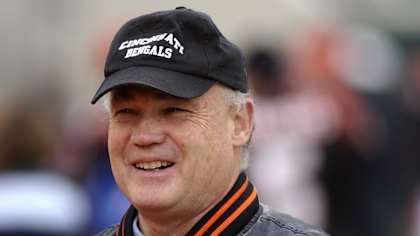
“I told him (Pillman), you’ve got to study this wrestling thing.” – Kim Wood
Kim Wood never worked a day in the professional wrestling industry, but he was among the higher percentiles who understood it.
After he passed this week, he will be memorialized in several fields: as the first strength and conditioning coach for an NFL team, at the forefront of bodybuilding equipment, and as a mentor to the late Brian Pillman.
Wood died this past Tuesday at the age of eighty and leaves behind a mark felt in gyms across the country, wisdom instilled in athletes across generations, and his fingerprints over the ‘Loose Cannon’ persona Pillman exhibited and executed in 1996.
Wood was born in Minneapolis but grew up in Illinois and would play football at the University of Wisconsin. His passions were football and weightlifting.
Wood found his own mentor in Arthur Jones, a prolific inventor who led the way on many advancements in strength training. Jones was the founder of Nautilus and gained notoriety from their state-of-the-art exercise machines, including ‘The Blue Monster’. He was an advocate of high-intensity training, a mindset Wood adopted and swayed from the conventional process of using free weights for long periods. It was a concept of efficiency and effectiveness over quantitative lifting.
Mr. Jones’ invention led to the “machine environment” that is prevalent today in health clubs. The company grew rapidly, and the machines helped to transform dank gyms filled with free weights and hulking men into fashionable fitness clubs popular with recreational athletes. (New York Times obit on Arthur Jones, Aug. 2007)
Jones sold his interest in Nautilus in 1986, where Wood had served as his right-hand man and run its operations out of the Midwest, beginning in 1972. Wood would embark on his own venture, co-founding Hammer Strength and running it until 1997, when it was sold to Life Fitness.
Wood came on board with the Cincinnati Bengals in 1975 as the league’s first full-time strength and conditioning coach, as athlete advancement in that area would skyrocket in the coming decades.
Former linebacker Reggie Williams:
No other one person is responsible for turning an Ivy League prospect into a 14 year starting linebacker in the NFL than Kim Wood. If he demanded one more rep, I would give him two. Absolutely no steroids! Just 8-12 perfect reps to failure, three times a week, keep a chart, don’t cheat yourself, and always improve, every workout, no matter where you are on the planet. Pain is your friend. Only appears when making you stronger. Rest In Eternity my friend.
He was part of the Bengals team that went to Super Bowl XVI in 1982, losing to the San Francisco 49ers at the Pontiac Silverdome under coach Forrest Gregg. The team returned to the Super Bowl in January 1989, losing by four points to the 49ers, again.
While at the Bengals, he met Brian Pillman, an undersized but overachieving player.
The future pro wrestler was a walk-on at the University of Miami of Ohio as a nose guard despite his size. Pillman went undrafted in 1984, when the Bengals picked quarterback Boomer Esiason in the second round. Pillman attended the Bengals camp, where he earned a spot after a major tackle he completed in the final exhibition game.
Pillman spent one year with the Bengals, earning the Ed Block Courage Award, voted on by teammates for the player exhibiting inspiration, sportsmanship, and courage.
It didn’t prevent Pillman from being cut after one season, and he was grabbed by the Buffalo Bills and was their final cut in the next season’s training camp. To keep his football dreams alive, he went to Canada to play for the Calgary Stampeders of the CFL, but only played three games when an ankle injury ended his hopes.
Wood was a lifeline, remaining close to Pillman, and steered him toward professional wrestling and Stu Hart in Calgary. He was a natural fit for that territory as a football player, where size wouldn’t be a detriment. He debuted in November 1986 and quickly formed Badd Company with Bruce Hart, who became another mentor for Pillman.
Pillman was part of the Stampede reboot after Vince McMahon went back on his deal and allowed Stu to reopen the territory. Pillman was among a roster with Owen Hart, Jushin Thunder Liger, and Chris Benoit. Pillman loved his time there and dived into the industry’s history where “Hooker” by Lou Thesz became influential, and he was constantly quizzing Stu on historical figures.
He was on WCW’s radar after Kim Wood pitched him to Jim Ross, with Paul Heyman also seeing something in him. It was not until George Scott’s ouster as booker in 1989 that the door was opened for Pillman as Ross gained more power on the booking committee. Pillman signed a deal for $104,000 per year.
Like with football, Pillman had to punch above his weight, and in WCW, size would be a factor, along with a dollar figure that didn’t necessitate Pillman being pushed higher than his rank. In February 1990, he had a match on Saturday Night with Ric Flair and drew a 4.0 rating and 2,130,000 homes, but unlike the tackle that won him a spot on the Bengals, wrestling was a lot more subjective.
Pillman had several showdowns over money in WCW after receiving a bump in 1992 to around $225,000 per year. When Bill Watts was tasked with slashing costs, Pillman wouldn’t budge and take a cut, and was re-upped at the same figure in 1994.
The next due date for his contract was coming in April 1996, and Pillman was going to shoot for the stars. Convening at Kim Woods’ home, Pillman and Wood, with input from Bruce Hart, devised the ‘Loose Cannon’ persona, with the designs of Pillman creating so much buzz that WCW would be forced to pay him main event level money and push him as one.
He created a hotline, became a right-wing shock jock on Cincinnati radio, showed up in ECW cutting “shoot promos”, and created a chaotic nature whenever a camera was rolling or a microphone was hot.
His ideas extended to the insane when devising an idea to storm the field at the Super Bowl at Sun Devil Stadium that year and handcuff himself to the field goal post. The idea being that the publicity would be worth getting arrested over, and encouraged by Terry Funk. Wood was his NFL contact to get him into the building, but he knew they would trace it back to Wood, and he’d be excommunicated. His next option was reporter and Torch columnist Mark Madden, who wasn’t going to hand over his credentials and see this PR disaster land on his lap for Pillman’s benefit.
It was time and place, and Pillman was the talk of the industry, fueled by newsletter coverage, Pillman’s hotline, and the emerging technology of the internet.
The goal was simple for Pillman: to get a big contract and a main event push in WCW. He needed leverage, but for WWF to even entertain talks with Pillman, he needed to be cleared to negotiate, and in a brilliant move, orchestrated his release from WCW to further the story of his work-shoot character, but underneath it all, to leverage WWF against WCW in a bidding war.
The pieces came together like the conclusion of a murder mystery novel, with the way it’s remembered.
It nearly came to a crushing end on April 15 when Pillman wrecked his Humvee and suffered permanent damage to his body from the accident, with his ankle permanently compromised. He was fretting that he had the world of wrestling in the palm of his hands, and it slipped away. Who would want to sign him now?
The answer was, surprisingly, both.
WCW was still willing to offer $425,000 over three years, but the caveat of a 90-day cycle worked into the contract where he could be cut at anytime with three months’ notice. It was a deal breaker because Pillman put on a brave face to WCW about the Humvee wreck, but knew his athletic skills were severely diminished, and he could easily be cut with such a larger contract.
WWF didn’t waver and signed him in June 1996, with help from advocates Jim Ross and Jim Cornette in the office to convince Vince McMahon that Pillman was a “must” have. It didn’t hurt that McMahon was losing a war to WCW and had just lost Scott Hall and Kevin Nash.
Sadly, Pillman would never reach peak form again and was hampered by exhaustive pain from the Humvee wreck and forcing himself back to the ring too quickly in 1996, and needing another operation from overexertion. He spiraled throughout 1997 with heavier drug use and died in October.
Wood stayed attached to pro wrestling on the periphery and popped into the world when Pillman was memorialized, including a 2006 DVD on his life, and for Dark Side of the Ring five years ago.
In 2017, Liam O’Rourke wrote the definitive biography of Pillman, with Wood serving as a major sounding board and source throughout the book.
When POST Wrestling interviewed the author, he conveyed the importance of Wood to his book:
Kim was one of the first people I spoke to after I decided I was going to seriously work on this as a project. Where I think this helped me tremendously is that, since Brian’s real introduction and early education to wrestling and the way it worked was through Kim, I was able to get a sense of Brian’s outlook on things.
I remember when I spoke to Mark Madden and I was telling him what I’d done, he made a point to say, “You’ve done this book a great service by talking to Kim, and talking to him first because nobody knew Brian the way Kim did”.
Kim was more directly important because a lot of the plan was his. Not the whole thing, but a good portion of it was. It was Kim’s idea to work on the inside with Bischoff to kayfabe the guys, and it was ultimately Kim’s suggestion to Brian to get the termination papers from Bischoff to allow him to negotiate with the WWF while he was hot. Kim was a constant sounding board and reference point, and while Brian had a lot of people he’d bounce things off, it really was only Kim and Brian that knew the end game from start to finish. And even then, as Kim said, so much of that was luck, fate, and just plain making it up as you go along.
Wood will be remembered this week in various fields, and pro wrestling is among them, despite no direct connection to the industry. He was a fan of the political “game” that pro wrestling has become. He was always trying to uncover the “con” and who the masterminds were and who were the naïve.
While pro wrestling is executed in a predetermined fashion, the machination behind that predetermination is very much real. It was this fascination that kept Wood intrigued by pro wrestling, where the real game of pro wrestling was played behind closed doors, and he was apt to detect the façade and the con at play.
