
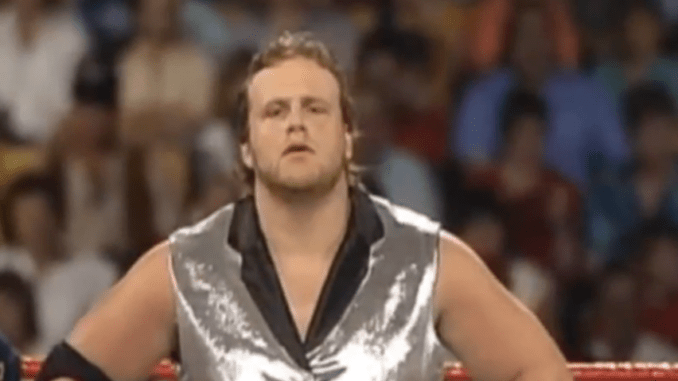
Jerry Grey, who was a territorial wrestler throughout the ‘80s’, died after battling cancer for over a decade.
Grey was a noteworthy enhancement talent in many of the top regions of the country throughout the 1980s and was booked on multiple tours for New Japan Pro Wrestling, and became a promoter after his in-ring career.
Grey was born in Akron, Ohio, but moved to Florida with his family when he was a teenager and set his sights on becoming a pro wrestler at a young age. He was rebuffed by Hiro Matsuda and the Championship Wrestling from Florida office when he inquired about training, instructed to finish school first. Rather than give up on his plan, he sought out teaching from Boris Malenko and Louie Tillet in the area and started wrestling for their outlaw group, Sunbelt Wrestling, when Grey was seventeen.
Sunbelt Wrestling didn’t have a long life, and Grey was on the go and got booked in Georgia Championship Wrestling when he was merely eighteen years old, and GCW was broadcast nationally on the superstation and was a juggernaut.
He made it back to the state of Florida and wrestled for Eddie Graham as an enhancement talent when the territory was doing really well, before Dusty Rhodes’ exit to Jim Crockett Promotions and taking talent with him.
In 1983, he started in Mid-Atlantic, which had a very deep roster with Grey working in a similar role before heading to Mid-South in early 1984. By the age of 21, Grey had worked in some of the biggest territories in the country, with a lot of pressure in locker rooms with depths of talent and experience. One of the biggest shows of his career occurred on April 7 when he wrestled on the undercard of “The Last Stampede” card against Tom Zenk at the Louisiana Superdome in front of 25,000, featuring Bill Watts returning to the ring with Stagger Lee (Junkyard Dog) against The Midnight Express.
Later that year, he had another cup of coffee in Florida before heading to Oregon to work under Don Owen, where he received the first push of his career. Grey was immediately winning matches and would hold the area’s tag titles with Tom Prichard for just over two months. It was an extended stay lasting until the summer of 1985, and Grey returned to Mid-South, where he got to work with Jake Roberts, Eddie Gilbert, and The Fantastics.
By 1986, he was back for his latest stint in Florida, and this was after Eddie Graham’s death the year prior, and the territory was declining. In March, he wrestled a young Lex Luger for the vacant NWA Florida Television title, with Luger becoming champion less than two years into his career. He would become the Florida Bahamian Champion in March 1986 when he feuded with Tyree Pride.
Grey caught the attention of New Japan Pro Wrestling that year and was booked for his first tour in August & September, wrestling Tatsumi Fujinami, Akira Maeda, Nobuhiko Takada, and several tags involving Antonio Inoki. He left enough of an impression that he was booked on subsequent tours in the ensuing years.
In the U.S., he continued wrestling in Florida and was active in the territory when Jim Crockett Jr. took control as the territory was dying. During this time, he formed a team with Bob Cook as The Mighty Yankees and became the Florida tag champions in September 1987 when they beat Mike Graham & Steve Keirn.
Grey continued to travel to New Japan for tours in 1987 and 1988.
He was booked for several enhancement matches by the WWF in December 1987, working against The Islanders, Sam Houston, and Randy Savage, and returned for a pair of tapings in January 1988 in short matches against the One Man Gang and a tag against The Bolsheviks.
Florida shut down in 1988, and that was the end of Grey’s active wrestling career as he moved into promoting and did effectively, where he saved money and was ravaged after his health ailments over the past decade.
From an interview with Greg Oliver in 2018:
When the Florida promotion shut down, Grey saw an opportunity and started promoting shows in 1988, using the WPW name. His connections meant that he could bring in big names like Terry and Dory Funk Jr., and Blackjack Mulligan and his sons, Barry and Kendall Windham, for cards. He always made sure to pay the big stars up front when they arrived so positive word spread. After all, Grey had been there too. “I made sure they got their money right when they walked in the door, usually, because I know how it feels to sit there and wait, wondering if you’re going to get money.”
The transition to mostly paid shows made sense and Grey ran with it, seeing the country once again.
In 2012, Grey was diagnosed with colon cancer and put an end to his days of promoting. He had a rough battle as the cancer spread to his liver and left him in a lot of pain and in need of resources because of the financial hardship of fighting cancer.
