
Please don’t make this political.
I just want to enjoy wrestling without being told what to think again or getting dragged into another argument about who I’m supposed to vote for. I watch WWE to escape from the world’s problems, not to think about them.
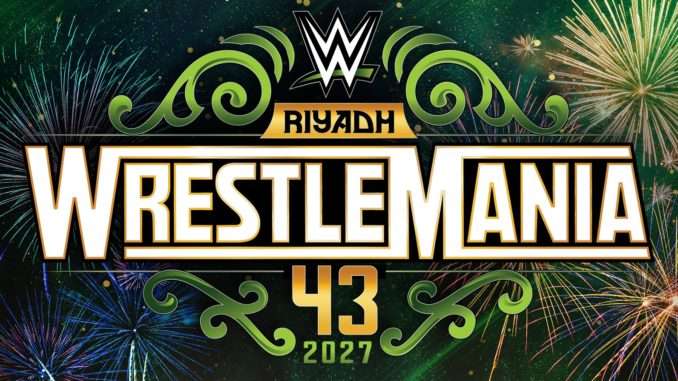
That’s why I love what the Saudi Kingdom has done. Like me, they don’t do politics—it’s literally not allowed. And today, in a press conference at which no press were allowed to be present, it was announced that WrestleMania will come to Riyadh in 2027. This guarantees—not only ridiculously enormous fees for WWE—but also that that year’s WrestleMania will be 100% politics-free.
Don’t get me wrong, I have my complaints about the government—but that’s only about the government in the U.S., where I live, or maybe other annoying Western democracies. The Saudi government doesn’t affect me, so it’s just not my business.
While we’re at it, we need to get something else straight here. Despite what the naysayers tell you, the spectacular Saudi premium live events are no different than all the other international events WWE runs across the globe—except they’re actually way more profitable than virtually any shows in pro wrestling history. Some of you seem to have forgotten that the wrestling business is a business.
WWE gets $50 million per show for typical Saudi PLEs, and who knows how massive the WrestleMania payment will be. That money is guaranteed, no matter how many fans are in the seats. WWE is paid directly by the government. His Excellency, Chairman Turki Al-Sheikh, ensures top-tier production, even if the women’s division is carefully managed and dressed in scuba gear. Those are just cultural differences, and if you don’t support that, then you’re the one who’s a hypocritical bigot for wanting women to be allowed to perform and express themselves more freely. Because if you really think about it—and I mean think about it hard, and actually do mental gymnastics about it—it’s empowering that women are even allowed to stand in the ring in Saudi Arabia now. Being included on the specific conditions of a male-dominated monarchy isn’t just an honor; it’s the epitome of government-friendly feminism.
I don’t listen to what the critics say. I listen to people from WWE who are actually involved in reshaping the Kingdom’s image.
Paul Levesque pointed out on Pat McAfee’s show earlier this week that you can’t just ignore people who “don’t do things right.” WWE has been part of the change and is causing the world to view the Saudi government’s actions as normal, like never before. McAfee rightly praised his guest. It takes courage for WWE to cash a guaranteed $50 million check and call it social progress. Levesque nodded along because you can’t make that kind of progress by saying no to such generous compensation.
People like to use this term, “sportswashing,” for these events. That phrase is hurtful.
Do you want the ultimate proof that WWE in Saudi Arabia isn’t about propaganda? Look at CM Punk’s apology last June. Punk is a zealously political person, but he put his politics aside and delivered a heartfelt message of respect that served as one of the most polished and submissive pieces of state-aligned messaging ever broadcast out of the Kingdom and into Western media.
And, by the way, I’m not one of these wrestling tribalists. I won’t be surprised if AEW and Tony Khan sign up for some sovereign wealth someday, too. Khan’s not ruling it out. I’ll be consistent and praise that just as well.
I also like what Cody Rhodes said a few months ago: WWE is a nonpartisan brand. Critics of these shows are just playing gotcha. They’re prying into people’s beliefs, which are none of anyone’s business.
I’m sick of hearing the critics disrespect the Saudi people when they ask things like:
“Why does this government label peaceful expression as ‘terrorism’?” or
“Why are authorities carrying out a record number of executions, including against two men who were minors when they were charged with protest-related crimes?” or
“Why doesn’t the monarchy have fair trials?” or
“Why does being supportive of LGBT rights get you jailed?” or
“Why does this government imprison women’s rights activists?” or
“Was that journalist dismembered with a Kingdom-issued bone saw?” or
“What was the Arab Spring about?”
I’m sorry, but those are just gotcha questions. Each and every one of them.
Look, the only human right I’m interested in anyway is the right to be entertained.
What the haters don’t get is that the Kingdom is deeply involved in a variety of aspects of sports, entertainment, and U.S. commerce. What are we supposed to do? Boycott Formula One, practically all of soccer? Stop tweeting? What are all those businesses with Saudi investments supposed to do? Say ‘no’ to all that money? Just give it all back? In fact, because the monarchy’s far-reaching influence in business and culture is everywhere, that should assure us, not concern us. The ubiquity and persistence of autocratic regimes—furthermore—should exhaust us, should ideally make critics give up, give in, put politics aside, and stop questioning it.
As a society in the U.S., we’ve become so obsessed with political identity. Everyone’s always trying to persecute you for your political beliefs. It’s so tiring. People post their political rants all over social media nonstop, almost without consequence. We all know how awful that is. But in Saudi Arabia, there’s none of that. The country is completely nonpartisan. No political parties. No critical media. No protests. No elections to even worry about. Just one visionary leader: His Royal Highness Crown Prince Mohammed bin Salman, who has allowed women to drive cars.
Take it from TKO President and COO Mark Shapiro:
“We like what we’re seeing and hearing in terms of the leadership of [Saudi Arabia] at the moment,” Shapiro said at a conference last March, defending both WWE and UFC’s relationship with the government. “They’re saying the right things. They’re putting their money where their mouth is.”
“We like the direction they’re going in, and if we didn’t, we wouldn’t be there,” he added.
And I know how much the TKO President cares about money and where it’s going, so that’s good enough for me.
TKO Board member Jonathan Kraft even chimed in. “The only way things are ever going to improve from the baseline is when people with differing views are welcomed,” the heir-apparent to the New England Patriots said as he sat beside Shapiro.
These events crucially allow us to understand different perspectives, to empathize with leaders who may want to kill you for expressing your perspective, as well as to better understand authoritarians who want to pay you millions of dollars.
Then Kraft immediately soothed conference-goers with one of my favorite whataboutisms on this issue: “And some might look at our country and say we have our own issues, and who are you to stand in judgment.”
Indeed, where’s the outrage when WWE or UFC do business in the United States practically every week? The U.S. government is as guilty as any. Some will nitpick that those are fan-driven events at mostly privately-owned venues in the U.S., not staged as federal propaganda—well, unless you count UFC’s upcoming show on the White House lawn—and that the key distinction is the vast sums the Kingdom is paying to rebrand its monarchy. But let’s not get bogged down in fine print. If everyone’s guilty, then nobody really is, which makes this deal all the more admirable.
Shapiro and Kraft’s message is right in line with TKO CEO Ari Emanuel’s comments a while back, where he had to somehow explain why he returned $400 million to the Saudi government—when they lured, murdered, and dismembered journalist Jamal Khashoggi in 2018—but then agreed to go along with WWE events in the country upon the TKO merger in 2023. Emanuel’s justification was clear and irrefutable: All countries do bad things.
“Governments do bad things,” Emanuel said a few weeks after the deal to combine WWE and UFC was signed. “Let’s just say that and then work through all our own emotional ethics.”
And when the interviewer weirdly tried to press the CEO on why he gave the money back, he replied with an absolute argument-ender, saying, “I don’t know. I just, you know, I don’t really, I don’t really know.”
What people rarely give the Crown Prince enough credit for is granting women the priceless gift of automotive freedom. They can drive now—a reform so gracious it lifted Saudi Arabia all the way to 126th place out of 146 on the global women’s rights index. More credit, too, needs to go to General Entertainment Authority Chairman Turki Al-Sheikh, whose takeover of combat sports is helping people worldwide forget about the slander against the regime. Criticisms aside, with everything the Kingdom is doing to its citizens and the world, you just have to step back in astonishment and ask yourself—How much farther is this government willing to go?
Rather than questioning the country’s human rights record, what we should be asking are things like:
“Isn’t it amazing how sports can bring us all together, no matter how many dissidents the state had to execute last month?” and
“Why hasn’t the U.S. developed a General Entertainment Authority of its own?” and
“Based on the Kingdom’s wonderful example, are tired traditions like free speech and free elections really necessary?”
Regardless of anyone’s opinion, WWE has a ten-year deal with the Kingdom that started in 2018. With the additions of the Royal Rumble and WrestleMania, the relationship has only gotten bigger since then. Accept the fact that these events are going to be around for a long time to come, and get over it.
The bottom line is, if this business relationship still bothers you, maybe you’re the real threat to global peace. Maybe you think women should wrestle in something other than tactical wetsuits. Maybe you’re the kind of morally superior person who puts human rights over premium live events and ethics over profits.
WWE does things differently. UFC, too. They put finances over feelings. And that’s the beauty of spectacles like Crown Jewel, the 2026 Royal Rumble in Riyadh, and WrestleMania in Saudi Arabia: They build strategic partnerships, enhance shareholder value, and normalize a powerful dictatorship—all while entertaining you.
And there’s definitely nothing political about that.
For those who still need it spelled out, this is satire. Unless you’re an authoritarian official, in which case, your excellency, I am forever grateful to be beneath your benevolent gaze.
