
By any historical metric, WrestleMania 42 is an unqualified success, but the company is using its own stories to tell you the opposite.
Last year, the numbers were staggering and epitomized the influence the company commanded when planting the WrestleMania flag in its host city. The combined two-night gate hit a stunning $66 million, and once you attach the Las Vegas site fee, tax credit, sponsorships, and Peacock revenue streams, it gives you a signal of the high bar 2026 needed to clear.
Mark Shapiro labeled this year as one “of execution,” and TKO has set expectations high by placing revenue targets at the top end of more than $5.7 billion this year and telling the street it will deliver a 21% increase.
WrestleMania is not the be-all and end-all, but it’s a revenue driver, and it’s baked into the greater TKO pie of profitability with a built-in expectation of year-over-year growth. It’s the only way you explain this year’s show being anything short of a financial home run.
The erratic return to Las Vegas was set in motion with an “egg on its face” moment after a public reveal by its most famous face, Dwayne Johnson, telling New Orleans that WrestleMania was returning for the third time in twelve years. Three months later, Paul Levesque appeared on camera with the emotion of a hostage victim to explain ‘Mania is returning to Las Vegas, and New Orleans can take a number.
Big plans for @WWE and New Orleans for 2026 and beyond… pic.twitter.com/fExKOUPMc9
— Triple H (@TripleH) May 23, 2025
It was absorbed by the audience as the TKO doctrine that revenue, revenue, and revenue will always trump fan sentiment, with a willingness to eat criticism knowing its audience always comes back. Las Vegas clearly saw the incentive after Easter Weekend 2025 (a dead period for the tourist-heavy spot) and incentivized WWE to break its word and contract with New Orleans to reel in ‘Mania. The 2025 package saw the Las Vegas Convention and Visitors Authority pay a $5 million fee (cc: WWE comms department, “Financial Incentive Package”) with a $4.3 million tax credit. The package brought two nights of WrestleMania to Allegiant Stadium, three live events at the T-Mobile Arena with SmackDown, Raw, and Stand & Deliver, the World convention, and a side deal with the Fontainebleau Hotel for the ancillary shows like the Hall of Fame, The Roast of WrestleMania, The Undertaker’s podcast, and After Dark events.
The LVCVA would disclose that nearly 119,000 attended WrestleMania (right in the range of WrestleTix’s final estimate of 122,000 tickets distributed). Even more important was that over 80% of attendees were from out of town. That meant hotels were booked, restaurants were frequented, and travellers’ dollars were left in the state. That percentage exceeded other live entertainment in Vegas like Coldplay, AC/DC, Kendrick Lamar, and Shakira.
It was a gamble returning to Las Vegas, while serving as the last domestic WrestleMania until at least 2028, with Riyadh to host next year’s version.
The first count released by WrestleTix last December saw approximately 36,000 tickets out for each night. Since then, movement has crawled, and with days away from the event, the numbers sit around 43,000. The big unknown is the gate for this year’s show and what 43,000 (and counting) translates to, but the proof is found in the WWE’s own messaging: They are not satisfied. One would assume the number to inflate over the final days, and we should get a clearer picture after the event.
Dozens of reasons have been cited, from the state of the economy, the aggressive pricing, fans unwilling to travel to the same city again, the lack of tourism in Las Vegas (especially among Canadians), and no John Cena or Dwayne Johnson in this year’s promotion.
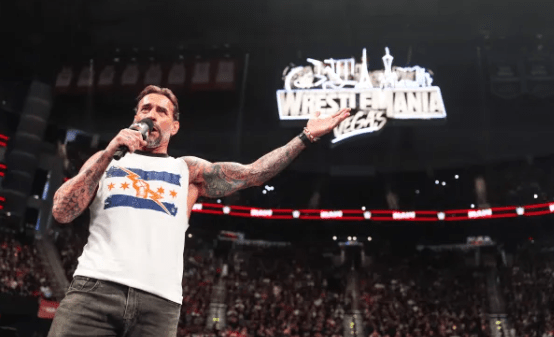
All valid reasons, but it’s been WWE’s own messaging that has struck the loudest chord with a level of pleading on its airwaves for ticket sales. It’s one thing to heavily promote a ticket sale, but another for Pat McAfee, CM Punk, and Roman Reigns to acknowledge degrees of softness in the year’s business.
McAfee outright said it is stunning that tickets are still available and blamed Cody Rhodes, CM Punk called out TKO and Ari Emanuel for overpricing tickets, and Roman Reigns vowed to get business back on track by winning the title.
McAfee is the largest crossover for the sports audience they market toward, and the result has been multiple stories this week (The Hollywood Reporter, USA Today & Sports Business Journal) focused more on the business shortcomings than TKO’s “execution story” of 2026.
It is the first time that TKO has felt compelled to make such a promotional push to ensure markers are hit for the WrestleMania quarter. In an era where live events are a thing of the past, premium live event revenue is guaranteed, television and streaming contracts are set for the year, and talent pay is set to a specific percentage annually, ‘Mania is one area where the revenue is not guaranteed, and it is forcing a promotional company…to promote. The standard “business-to-business” relationship is transformed to the old “business-to-consumer” model for one weekend.
It hit an unprecedented mark last Friday when heel Pat McAfee introduced a limited “25% off” sale for tickets on the first night (but not for night two, because that card “is ass”, per McAfee). Heading into the weekend, ticket sales are down by approximately 9,000 from the same point in 2025.
WrestleMania Saturday
Sat • Apr 18, 2026 • 3:30 PM
Allegiant Stadium, Las Vegas, NVAvailable Tickets: 1,741
Available Combo Tickets: 1,034
Current Setup: 47,094
Tickets Distributed: 44,319📈 +730 since the last update (2 days ago)
📅 Days until show: 2
🔢 Total # of seats… pic.twitter.com/nQ1mwquOuZ— WrestleTix (@WrestleTix) April 17, 2026
For many, it’s “too little and too late” when this is a traveling audience. It misses one of the important stats that made this event so enticing to Las Vegas. In the LVCVA’s report, 81% of attendees on the first night came from outside of Vegas, and 84% for night two. Few are making a last-minute trip to Las Vegas and made that decision weeks or months ago.
The demand has not met the supply, and with so much focus on WrestleMania’s performance, it has camouflaged dramatic decreases for Friday Night SmackDown and Raw at the T-Mobile Arena. Last year, Pollstar reported 15,956 paid and a $2.5 million gate for SmackDown, and 16,738 and nearly $3.5 million for Raw. As of Friday, the shows have moved approximately 8,880 tickets per night.
No one is going to shed a tear for TKO, and when one totals the gate figures, its site fee and tax credit, inevitable increases in sponsorships, and the increase moving from Peacock to ESPN, this show will still generate jaw-dropping figures. As a publicly traded company, you’re only as good as your year-over-year increase, and great business only sets the bar that much higher for the encore performance. This year, WWE will scratch and claw right up until show time.
The average wrestling fan is still going to watch the show and come back on Monday, and next Friday, and will be glued to Backlash in three weeks. But to the audience WWE covets most, the ones that write for prestige media, hold capital in the sports and influencer space, and ones that generate buzz, its perception has been damaged this ‘Mania season.
If a conclusion can be drawn, for a show where revenue was not guaranteed, and the company had to compromise with its audience, it has shown a major disconnect and painted a negative narrative using its own brush.
