
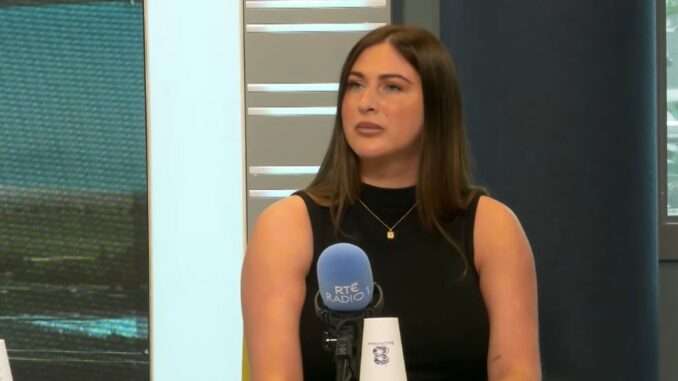
Nikita Hand, the Irish woman who won a 2024 civil lawsuit finding UFC fighter Conor McGregor liable for sexual assault, recently detailed her ongoing road to recovery.
In her first public interview since the high-profile case, Hand told RTE Radio 1’s Brendan O’Connor Show what life has been like following her 2018 encounter with McGregor, describing her healing process ever since prevailing in the courtroom.
In the lawsuit, Hand alleged that McGregor had sexually assaulted her in a Dublin hotel room, causing physical injury and triggering a still ongoing mental health battle. Hand has since been unable to work, and described battles with anxiety attacks and alcoholism after that night.
Hand opened up about her changes in the recent interview, talking about how she’s still on a path to loving herself again.
“Nikita before that night had so much confidence,” she remembers. “She loved her body, she loved dressing up, how she looked. After that night I lost a big, huge part of my life. I have to learn to love the new Nikita now. I’m not quite there yet, but I know I will get there … You do lose a huge part of yourself when something so traumatic happens to you, after being raped or sexually assaulted. It takes a lot away from you.”
Hand described initially not wanting to press charges after her encounter with McGregor. After telling her mother about what had happened, the Dublin-based hairdresser recalled trying to move on.
“We’ll get sorted, we’ll get home and forget anything ever happened,” she remembers saying. Her mother, who Hand credited with saving her life, said she wouldn’t simply be able to ignore that night.
Hand eventually realized that, had she not tried to seek justice, there would be constant reminders of her time around the Irish public figure.
“If I had walked away from this, I would’ve seen him in the newspaper,” Hand said. “I would’ve seen him on TV. I would’ve heard about him. It would’ve been in my face… It is in my face all the time. I knew I wouldn’t live with myself if I didn’t try to seek justice.”
In the months since Hand’s courtroom victory, her battle has continued. While she considers the result vindicating, she admits that the harm of her encounter with McGregor is still something she carries every single day.
“Me winning, obviously, it has helped me,” Hand said. “But it still doesn’t take away the nightmares, the anxiety or the PTSD. We still obviously have to live with this for the rest of our lives.”
Hand’s lawsuit played out in the public eye, with daily case updates allowing for onlookers to judge and write their own verdicts via social media. She admits that seeing people muse about her real-life dispute was damaging, and that she still feels the effect of having such an issue play out in the public.
“I still to this day get DMs threatening me, body-shaming me … Calling me names, I still get it to this day. But, look, I could get 10 hate DMs, and I could get a hundred beautiful messages. So I have to look at the positive more than the negative.”
Earlier this week, Hand published her memoir “Not The Perfect Victim.” She told O’Connor that she wrote the book to try and inspire those who have gone through similar experiences as her.
“I want victims to be able to read my book, or hear my story, and have the strength to speak out or tell a friend or family member,” she said.
