
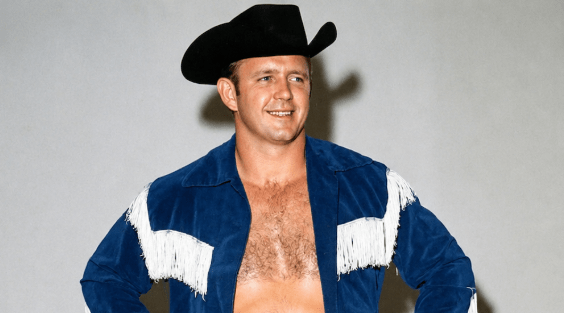

Audio version available for POST Wrestling Café members
The chain of professional wrestling’s history lost one of its strongest links this week with the death of former NWA World Heavyweight Champion Dory Funk Jr.
The member of the famous family had quietly entered hospice care and exhaled for the final time at the age of eighty-five this week, ending a remarkable life that left too many imprints to count within his chosen industry.
As a booker, he was responsible for the architecture of the first Starrcade event and helped shape All Japan Pro Wrestling. As a trainer, he provided an education for future Hall of Fame stars ranging from Jumbo Tsuruta to Genichiro Tenryu and Kurt Angle. His tag team with brother Terry was the defining team of the ‘70s and ‘80s in All Japan and established the Real World Tag League as the preeminent tournament of its kind, building a legacy that continues today. Then, there was his tenure as NWA World Heavyweight Champion, where he defined the role of champion for many as the traveling kingpin for the syndicate of promoters. His legendary series with Jack Brisco became the rivalry of the decade when both men held gold and were attached by controversy until both men’s final days.
If there is a Hall of Fame worth any credibility, Funk was inducted into it a long time ago, with too many accolades to list and a daunting task for any historian to properly contextualize the influence, importance, and legacy of the man.
Dorrance Earnest Jr. was born on February 3, 1941, and while Amarillo became synonymous with the family, it was Indiana where Dory & Terry were born and raised. Their father, Dory Sr., the son of a police chief in Hammond, would enter the Navy before being immersed in professional wrestling and setting the course for his family’s vocation for the remainder of the century.
The Texas migration begins when Karl “Doc” Sarpolis buys out the Amarillo portion from Dory Detton and begins promoting towns. He recruited Dory Sr. to leave Indiana for Texas and come to his new venture as a babyface with the added incentive of a minority stake in the territory. It was a life-changing decision, and one that took on greater importance in 1967 when Sarpolis died of a heart attack, and Dory Sr. bought the outstanding shares from his widow to run Amarillo under the banner of Western States Sports.
Dory Jr. was in his formative teenage years, attending Canyon High School before going to the future “wrestling factory” that was West Texas State University. Dory Jr. was the first of many future mat stars to attend the school, with a student/athlete list including Terry Funk, Dusty Rhodes, Bobby Duncum Sr., Tito Santana, Bruiser Brody, Tully Blanchard, Ted DiBiase, Kelly Kiniski, Scott Casey, and Manny Fernandez. Dory played tackle for the team and helped take the team to the Sun Bowl in 1962 and prevail against Ohio University.
Days later, Dory Jr. would step into the ring for the first time on January 10, debuting against Jack Dalton (Don Kalt) after training by his father and immediately ascending the ladder within the territory. There was no “dipping your toe” for the son of the promoter as he was immediately thrown into matches with Wahoo McDaniel, Killer Karl Kox, Mike DiBiase, Moose Cholak, and winning the Amarillo version of its world title from Gene Kiniski within three months of his debut. From there, it was major matches with Verne Gagne (in a sixty-minute draw, no less), Lou Thesz, Harley Race, Fritz Von Erich, and Dick the Bruiser to continue his “baptism by fire” rookie campaign.
It wasn’t until October that Dory was finally beaten by The Sheik (Ed Farhat) in Amarillo, losing two falls within six minutes.
The accusations of nepotism would follow, but as seen time and again, you either sink under that pressure or rise and overcome. It’s clear what side Dory emerged on top of.
In 1965, Dory Jr. would wrestle his first matches in Australia and St. Louis, which became major stops throughout his career. St. Louis served as a “rite of passage” where if one received the endorsement of promoter Sam Muchnick, it would enhance their case for greater success in seeking the world championship. Dory came into the city in June, teaming with his father against Dick the Bruiser & Bobby Graham at the Kiel Auditorium, which would become an important venue in Dory’s career and the site of several classics with a future rival.
In Australia, he worked for World Championship Wrestling, where Jim Barnett and Johnny Doyle got their promotion on national television through Channel 9 with afternoon slots on Saturday and Sunday weekly. The territory paid very well with Funk Jr. calling it, “The most first-class territory I ever worked.”
Brother Terry would follow in the family’s footsteps, making his debut in late 1965. The brothers first teamed together in December and would eventually become one of the important tag teams in history and achieve the distinction of a brother tandem to each hold the NWA World Heavyweight Championship. Throughout their careers, they only opposed each other three times, including a tag match in January 1966 with Terry and Wahoo McDaniel beating Dory Jr. & Ricky Romero in Amarillo for the area’s North American tag belts. They had a singles match the following month, and then their most famous match occurred in 1981 in All Japan due to a circumstance where Bruiser Brody could not make the show and an emergency back-up plan was required.
The earliest recorded match involving Funk Jr. and Jack Brisco is listed on April 10, 1966, in Albuquerque, New Mexico, on the undercard of a show headlined by Ricky Romero and Mike DiBiase. The two would redefine the role of the champion in the next decade, and for fans of that era, it was nearly impossible to talk about one without linking to the other in the vein of Flair-Steamboat, Baba-Inoki, Misawa-Kobashi, and Austin-Rock.
Dory’s career would take its greater leap in February 1969 when he was crowned NWA World Heavyweight Champion after a contentious debate over who would succeed Gene Kiniski. The NWA would table its candidates with promoters pitching their choices and coming down to a vote. Obviously, Dory Sr. flew the flag for his son but received enough support to supplant the alternatives, and the date was set for February 11 at the Fort Homer Hesterly Armory in Tampa, where 7,000 saw the rarity of a championship change. The role of champion was a battle of attrition where no human was equipped to withstand the arduous schedule, living out of a suitcase, racking up thousands of miles, excommunication from family and friends, and acting as a disciple of the NWA and transporting the championship on a never-ending road show. It was not “if” but “when” the champion would bow out from burnout and the next hamster was placed on the speeding wheel.
Dory Funk Jr. was that hamster and attacked the schedule like no other. He broadened its horizon, taking the belt to Japan and being the one responsible for establishing the NWA letters in the country and going toe-to-toe with the principal figures of the JWA (Japan Pro Wrestling Alliance), Shohei “Giant” Baba and Antonio Inoki. On his first tour of the country in late 1969, he wrestled the men on consecutive nights to 60-minute draws. It was the December 2 bout with Inoki that stood above the rest as one of the classic matches of its period, going the distance without a fall. The two matches ingrained Dory among the Japanese audience, seeing how Baba and Inoki were so established and Dory lasted with both. It created Dory and the NWA title as being worthy of respect and credibility.
In his home state of Texas, Dory would draw several big houses as champion. Over six days, Dory defended the belt against Boris Malenko in Fort Worth, Killer Kowalski in Dallas, Wahoo McDaniel in Austin, Johnny Valentine in Corpus Christi, Mil Mascaras in Harlingen, and culminating with a defense against McDaniel at the Parade of Champions show in Houston at the Sam Houston Coliseum. The May 30 event was the largest wrestling show in Texas to that point, drawing 13,000, for Dory’s successful defense and including Boris Malenko vs. Fritz Von Erich, Johnny Valentine vs. Mil Mascaras, and Killer Kowalski vs. The Spoiler.
Two years later, that record was shattered when Dory defended the gold against Fritz Von Erich on June 24, 1972, at Texas Stadium in front of 26,339, setting an attendance and gate record in the state. They were figures that wouldn’t be broken until the David Von Erich Memorial Parade of Champions in 1984, and later, major WWE shows in the state.
Focusing on his rivalry with Brisco, the epicenter of the feud was in St. Louis. On January 1, 1971, the two met at the Kiel Auditorium with a sold-out crowd of 11,587, and thousands turned away at the door. Brisco was seen as the understudy and eventual successor to Funk Jr., winning a battle royal the previous month to earn the shot. Therefore, any time the technical stars clashed, there was the believability factor that this could be “the night” and thus, a story that would be told over the ensuing years. The St. Louis Wrestling Club promoted the match in its bulletin as a “battle that could be just a preview to one of the great rivalries of the next decade.”
They would not disappoint, going to a one-hour draw in their first meeting at the arena. Follow-ups saw nearly 13,000 return on November 19, 1971, going to another draw and Brisco locking him into the figure-four at the expiration mark. Their matches in St. Louis would go on hiatus until 1974 after both had lost the NWA championship.
By 1973, it was time for the ascension of Brisco by the NWA, and Funk Jr. was expected to do the honors, with the date set for March 2 in Houston. The passing of the torch was just days away when Dory suffered an accident on his ranch in Umbarger, Texas, falling out of his vehicle on the land and suffering a shoulder injury. The match was off. It became the conspiracy attached to the men’s rivalry for their remaining days, with one camp arguing it was a legitimate injury with no possibility of the champion wrestling in that condition and the other, suspicious of the timing and whether it was an ulterior motive to avoid losing to Brisco. Over time, most concede that there was an injury and the accident wasn’t made up. The question becomes whether Dory could have wrestled or if it was a convenient “out”, avoiding a loss to a fellow babyface technician, who would be taking the championship and the recognition as the best technical wrestler from Dory.
Peter Birkholz worked in the Houston office and wrote in his book, When Wrestling Was Rasslin’, that refunds were offered and Fritz Von Erich was called to take Dory’s spot against Brisco on the March 2 show. He states only fifty refunds were requested, with 8,000 on hand for the substitute main event.
Weeks later, Dory returned to action, and a title switch occurred, but not with Brisco. Instead, Dory’s four-year reign ended at the hands of Harley Race, who served as the transitional figure, getting the belt from Dory to Brisco.
Just days after Dory’s title loss, tragedy struck the family when its patriarch died of a heart attack. On June 3, Dory Sr. was hosting a barbecue and started wrestling with Les Thornton, and shortly after the “friendly”, he suffered a heart attack and died. He was only 54.
The sudden loss of Dory Sr. would have a ripple effect on multiple continents. Domestically, it thrust the Funk brothers into control of Amarillo and they would continue to run their father’s territory until 1978, when they finally sold it. In Japan, it was a major shift as Baba’s deceased lieutenant would open the door for Dory & Terry to assume his role as foreign booker, and the brothers gained enormous responsibility and influence within Baba’s upstart promotion.
Dory Jr. had been traveling to Japan for years since the 1969 tour and famous matches with Baba and Inoki. While Lou Thesz was a heavily respected figure, it was Dory bringing the NWA championship to the country that made those letters so important. The JWA would not be able to withstand the loss of Baba and Inoki, but the two figures left on very different terms. Inoki was accused of orchestrating a “coup”, which has been reported to involve a proposed double cross of Dory Jr. for the NWA title and Inoki positioning himself higher on the scale of the JWA, where Baba laid claim to that spot. Inoki was ousted from the JWA, and shortly thereafter, Baba would leave the group himself, opening the door for New Japan Pro Wrestling and All Japan Pro Wrestling to open in 1972.
The Funks play such a pivotal role as Dory Sr. (and his sons) were loyal to Baba for obvious reasons and brought with them the connection to the NWA. The NWA meant instant credibility, access to its champion, and a pipeline for the most coveted U.S. performers with the Funks as the intermediaries. It left Inoki outside of the major syndicate and forced him to create his own opponents and stories, presenting himself as a “shooter” and bringing in real athletes with credentials to beat. Whether it was Olympic gold medalist Willem Ruska, heavyweight champion Muhammad Ali, or Leon Spinks, “out of the box” ideas like Tiger Jeet Singh attacking Inoki outside of a mall for publicity or an inter-promotional feud with the IWE, it forced the tandem of Inoki and Hisashi Shinma to play with the limited cards it had. They sought credibility through alternative means by linking up with the NWF out of Buffalo before finally gaining entry into the NWA in 1976.
On July 20, 1973, only two months after Race’s win, he dropped the title to Brisco in Houston. The silver lining to the canceled match involving Dory Jr. was that you had an easy story to tell: that Brisco was the champion but had yet to defeat the man everyone associated as the champion of that generation and his chief rival. Brisco and Funk Jr. would square off in Houston on July 6 and went to an hour-long draw; they went the full time limit again on August 31 in Abilene and September 19 in Lubbock, and extended to a 90-minute draw on September 21. The enforcements were called on September 28 as former champion Lou Thesz was the referee for yet another draw. Brisco finally had his arm raised against the ex-champion on October 26 at the Sam Houston Coliseum with special referee Wahoo McDaniel.
They took their rivalry to All Japan in January 1974 for the full sixty-minute experience in Osaka and would wrestle each other for the better part of the next decade in St. Louis, Florida, Georgia, and the Carolinas.
Brisco finally got his win in St. Louis in February 1975 in front of more than 10,000 fans. Their final match in St. Louis occurred in August 1978, capping off more than eight years of their state-of-the-art matches and backing it up with strong returns at the box office.
It was poetic that Brisco’s title reign was ended by Terry Funk on December 10, 1975, in Miami Beach. It created the first brother duo to hold the belt and a further distinction that it was Harley Race ending both Dory and Terry’s reigns.
Throughout the ‘70s and ‘80s, the Funks became tremendous power brokers through their role in All Japan Pro Wrestling. Amarillo became a training ground for several future stars that Baba saw promise in, sending a young Tomomi “Jumbo” Tsuruta and Genichiro Tenryu to train under the Funks.
Dory Jr. was interviewed by SLAM! Wrestling years ago and spoke about training Tsuruta: “All Japan sent him to Amarillo to train with me. He actually had his first match there. He learned faster, executed better and quicker than anyone that I ever had the opportunity to train. 6’4″, 235 pounds — probably the ideal size for a wrestler. He career, he rose to the top fast. He had a short career even though it almost spanned 20 years. He is the only one that I’ve seen that can throw a forearm exactly like I do and apply the spinning toe-hold exactly. He’s the kind of athlete that doesn’t come around often. Really nice guy too”.
When All Japan introduced the year-end Real World Tag League, it featured some of the biggest stars in the industry with Dory and Terry as two of the major cogs in establishing the series. They won the inaugural version in 1977. The round-robin tournament included The Sheik & Abdullah the Butcher, Giant Baba & Jumbo Tsuruta, and The Destroyer (Dick Beyer) & Red Bastien.
Perhaps the most famous finale occurred in 1979 as The Funks outlasted The Sheik & Abdullah as the Funks rallied to secure their second Real World Tag League victory.
The brothers won their third and final Tag League together in 1982 in a loaded version featuring Bruiser Brody & Stan Hansen, Giant Baba & Jumbo Tsuruta, Harley Race & Dick Slater, Genichiro Tenryu & Ashura Hara, Ricky Steamboat & Jay Youngblood, and Super Destroyer (Scott Irwin) & Umanosuke Ueda. It preceded Terry’s first retirement the following year and forced Dory to find a new teammate in Baba for the 1983 iteration. Of course, Terry would come out of retirement for the next year’s Real World Tag League and reunite with Dory, but a certain edge was lost after Terry’s very emotional and “real” retirement as it was perceived by the fanbase.
It was a major war between All Japan and New Japan and was becoming the center of the wrestling stage. American wrestlers saw that they could make incredible amounts of guaranteed money in Japan, have all expenses absorbed by the company, and be treated like royalty. The biggest stars could command five figures per week, and therefore, everyone wanted the ear of the Funks to land these lucrative spots.
New Japan convinced Abdullah the Butcher to jump ship in May 1981 for a major increase in pay. The Funks were integral in responding and convinced Stan Hansen to jump from New Japan and appeared as a surprise at the Real World Tag League Final in 1981 for a reported $8,000 per week (doubling the amount he was making in New Japan).
By 1978, the Funks saw the lay of the land and sold the Amarillo territory, and despite their concerns to buyers Blackjack Mulligan and Dick Murdoch, they took over the area.
The Funks were spending time in Georgia Championship Wrestling and would win the group’s tag titles on November 23, 1978, winning a tournament final against Jack & Jerry Brisco and continuing the battle of the families.
In addition to St. Louis, it was Florida where Dory Jr. became a major figure, winning the Florida Heavyweight Championship four times, beginning in November 1980 for Eddie Graham.
When George Scott left his role as booker for Mid-Atlantic in the early ‘80s, Ole Anderson took on the unprecedented task of booking both Georgia Championship Wrestling and Mid-Atlantic until his own burnout forced him to give up one. It led to Dory Funk Jr. entering Mid-Atlantic and Jim Crockett Promotions to book the territory during a pivotal year. He assigned cities within the territory, allocating North Carolina to Gary Hart, Virginia to Wahoo McDaniel, and South Carolina to Ernie Ladd. In 1983, JCP had a tremendous year from “The Final Conflict” in March, where Jay Youngblood & Ricky Steamboat unseated Sgt. Slaughter & Don Kernodle for the tag belts in a steel cage match where they vowed to break up if they didn’t succeed. It led to a turn-away crowd at the Greensboro Coliseum and did great business in Toronto.
This period saw Dory and Brisco renew their rivalry, feuding over the Mid-Atlantic heavyweight title and taking the famous feud to all the markets, including a Texas Death Match in Columbia, South Carolina. It’s believed that their final 1-on-1 match was on March 20, 1983, in Asheville.
The Final Conflict led to the idea of the inaugural Starrcade, which would become the crown jewel for JCP as its annual Thanksgiving mega event. The closed-circuit special was launched seventeen months before the first WrestleMania and booked through the lens of the former NWA champion. The pinnacle moment was Ric Flair regaining the championship from Harley Race inside of a cage with Gene Kiniski as the enforcer. Dory was still balancing his JCP duties with All Japan and, given the calendar, was not at the Greensboro Coliseum that night due to the Tag League. Shortly after, Dusty Rhodes would leave Florida and take over booking duties of JCP and is the one credited with creating the name “Starrcade”.
Dory’s next major chapter of his career was leaping aboard the expanding World Wrestling Federation and following his brother. Rechristened “Hoss Funk”, he teamed with Terry on the second WrestleMania in April 1986, against the Junkyard Dog & Tito Santana. A month later, the two wrestled Hulk Hogan & JYD on Saturday Night’s Main Event, generating a 9.3 rating on NBC. Despite the four-year run as NWA champion, the WWF road schedule was not for him, and his tenure working for Vince McMahon consisted of six months before exiting. Jesse Barr, wrestling as Jimmy Jack Funk, would team with Terry for a period before the younger Funk also left.
Dory & Terry returned to All Japan in 1990 on the Giant Series tour and re-entered the Real World Tag League. They were booked with a respectable seventeen points behind Terry Gordy & Steve Williams and Stan Hansen & Dan Spivey, with the world tag titles awarded to the winners. It was their last tournament together, but Dory continued to participate through 1995 with makeshift partners Al Perez, Tsuyoshi Kikuchi, Johnny Smith, and Masa Fuchi.
The decade of the ‘90s was a hodgepodge of random stops for the former world champion. He booked for The Sheik in Detroit for a short time, wrestled Nick Bockwinkel in a one-off at WCW Slamboree in 1993, had a run with Terry in ECW and a No Ropes Barbed Wire match putting Public Enemy over in 1994, had a cameo in the Royal Rumble in 1996, challenged Shane Douglas for the ECW title on a Florida event in 1997, and was instrumental in developing talent for the WWF’s Attitude Era.
It became known as the “Funkin’ Dojo” and was closer to a finishing school to get talent ready for WWF television. Many of the promotion’s prospects had to receive the seal of approval from Dory and Tom Prichard, and those names included Adam Copeland, Jay “Christian” Reso, The Hardys, Lita, Val Venis, Rikishi, Mark Henry, Mickie James, Test, and Kurt Angle.
From Kurt Angle: “Dory Funk Jr. was a legend in many ways as a wrestler, a coach, and an incredible human being. I vividly remember the first time I had the privilege of meeting him at the “Dory Funkin Dojo” during a WWE tryout and training camp aimed at preparing young wrestlers for future performances on TV. Dory taught me the basics of pro wrestling, and there was no one better than him. He quickly took a liking to me and decided to be my coach and manager for my very first matches. His genius in our sport was unmatched, and his unique style and vast knowledge set him apart from others. Being “old school” was something I loved about him, but he also knew how to adapt to the evolving landscape of wrestling. Dory prepared me for my first matches in just five days, keeping things simple and basic so I could understand my movements in the ring. There will never be another like him. You will be sorely missed, Dory. Rest in peace, my friend”.
In 2001, with very few “firsts” left for Dory to check off, he managed to do so when teaming with Terry inside of a New Japan Pro Wrestling ring. It occurred in October when the brothers wrestled four matches for New Japan, including a tag at the Tokyo Dome against Tatsumi Fujinami & Bob Backlund.
In 2009, WWE inducted Dory & Terry into their Hall of Fame over WrestleMania 25 weekend in Houston.
Dory was based in Ocala, Florida, running his training school and BANG promotion, while frequently stepping into the ring for matches. He traveled overseas to wrestle for All Japan yearly until 2017.
His brother passed away three years ago, and FMW-E held a tribute show for Terry in August 2024, bringing Dory out of retirement one final time at the age of 83. He teamed with protégé Osamu Nishimura (who died several months later) to defeat Atsushi Onita & Raijin Yaguchi in a Double Hell Current Explosion Death match in Kawasaki. They went over thirteen minutes.
Dory Jr. is a member of the Wrestling Observer Newsletter Hall of Fame (inaugural class of 1996), WWE Hall of Fame (2009), St. Louis Wrestling Hall of Fame (2008), Stampede Wrestling Hall of Fame (1995), the NWA Hall of Fame (2006), International Pro Wrestling Hall of Fame (2022), the George Tragos/Lou Thesz Professional Wrestling Hall of Fame (2011), and recipient of the Lou Thesz Award from the Cauliflower Alley Club (2019) among his many accolades.
Professional wrestling is a never-ending story of facts, figures, and fiction, mixing and matching to write its history. The ties to a bygone era are going to become a little bit looser with the death of Dory Funk Jr. He represented a time and a place that presented a style and a performer that the audience clamored for and paid to see. The art of pro wrestling is that it is everything and anything for all walks of life. It can be presented in countless ways and understood in infinite interpretations. How one receives their version could be counter to the opinions of the person sitting next to them.
For many, when they paid for a ticket to see Dory Funk Jr., they were witnessing the world’s best wrestler in his prime, as heavyweight champion. For those fans in those years, Dory Funk Jr. defined professional wrestling.
Several notes, courtesy:
– Wrestling Observer Newsletter Archive
– When Wrestling was Rasslin’ by Peter Birkholz
– Wrestling at the Chase by Larry Matysik
– Top 100 Pro Wrestlers of All Time by John Molinaro
